4/03/2009

Resumption of Blogging

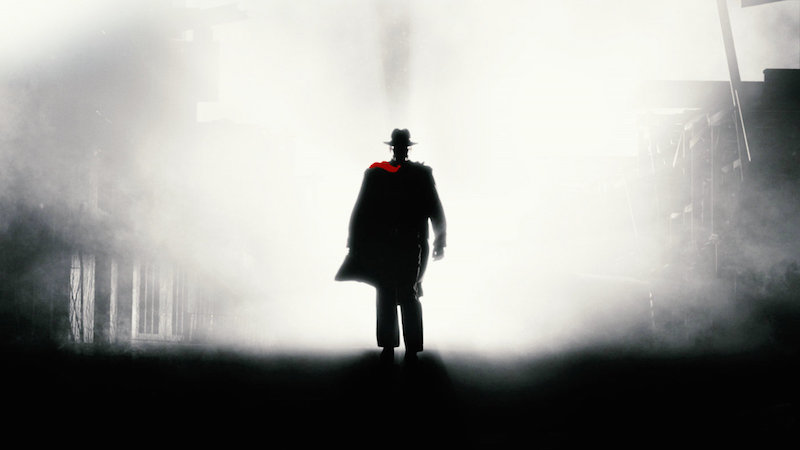
I've just completed a big move from Brisbane, which has left me little time to read or review. I did manage to catch the film adaptation of Watchmen before I left, and was planning to write about it. But I now don't have the energy, or the interest to clutter the internet with more commentary on the movie. I did react to the onscreen violence in much the same way that Jog did in his article:
There's no exchange of fists from the comics that can't be expanded into full-blown blocks ‘n throws combat. The Comedian doesn't just gas protesters from the eyes of the Owl Ship, he leaps into the fray and punches out the whole first line of protestors. If draws lil' Rorschach biting a bully's cheek in one panel with speckles of blood on his face in the next, makes sure to close in on the flesh tugging and stretching and lavishly giving way to spilling grue. Even the generous splash of blood of that one guy getting his throat cut at the door to Rorschach's prison cell, one of the bigger bloody bits of the comics, is replaced by a major gore scene marked with a delighted close up of a buzz saw closing in on the man's arms, rending his skin and muscle to gristle...

Let's go back to that hard-rockin' fight scene with the Comedian. He takes what has to be a dozen or so direct hits to the face, flies through all sorts of objects, and we're specifically told he's not a superhuman - surely his face ought to be a lump of hamburger! But no, there's only a few trickles of blood, presumably because Gibbons only drew a few trickles of blood, which of course was because he and were downplaying the entertainment value of the murder scene, i.e. exactly the opposite of what Snyder is doing, yet he keeps the trickle. That isn't the destruction of superheroes, that's Neal Adams' Batman in the ‘70s!
That is one reason why even when the film manages to be superficially faithful to the book, it actually undermines the original message in many little ways. It's doubtful that Watchmen will make cinematic history, but given the hyperbole that accompanies the graphic novel, it was inevitably going to disappoint many fans. This isn't an empty corporate property like Batman. The book itself is a singular achievement that can benefit from a frank reassessment.
***
I've just been going over my photographic film archives. I've been shooting in film twice as long as I've been shooting with digital. But there's no doubt that my digital output has recently surpassed my film output. Such is the convenience of digital photography. I haven't touched a traditional darkroom for more than seven years, and am unlikely to regularly use one from now on. All this has led to the realization that I need to digitize my film archives. I've been doing it on a piecemeal basis, but now I've got to get serious about it. But I need a better scanner than the one I have now. Just another thing to add to my .
***
is just as humourless as any large corporation. Or not.
PC Weenies by Krishna M. Sadasivam.
PC Weenies

2/24/2009

Whitewashing With Big Time Mediocrity

Whitewash.
Whitewash

In my post on the Avatar film casting controversy, I expressed a lot of skepticism over the choice of as director. Those reservations were based on the films he has directed throughout his career. His style, preferred subject matter, and increasing pretentious quality, are incompatible with the kind of straightforward adventure found in the original series.

As for the casting controversy, while not absolving him of being involved in this mess, this casting call and the choice of four all-white tween heart-throbs might have been pushed on him by Paramount to maximize the film's mainstream appeal and profitability. Whether this is true, and whether he initially fought, or unquestioningly supported, those directives is something no insider has yet divulged (as far as I know). Even Avatar's creators have kept mum this entire time. The silence from everyone is deeply suggestive of something going on behind the scenes.

The replacement of one of the leads with Indian-British actor in some ways actually makes things worse. 1st: it comes across as tokenism calculated to assuage fans who have initiated letter writing campaigns. Coming off the success of , Patel is already a proven talent and thus a relatively conservative choice. But 2nd: he's being cast in the antagonist role, making him the villainous Oriental fighting against the heroic Caucasians. And 3rd: the casting of a South Asian to play a role closer to East Asian still smacks of cultural insensitivity. All Asians apparently still all look the same to Hollywood.

The casting controversy has engendered some rather vehement online denials over the show's problematic Asian identity. This being the internet, they can get as tiresome and monotonous as self-righteous fan outrage. So I'd rather single-out Derek Kirk Kim's post again, as well as that of Gene Yang. Matt Thorn's essay on the drawing styles of Japanese manga and anime serve the case of Avatar just as well.

Given how little information is available on what is still the preproduction phase, no one knows yet what the film will finally look like. Fans are assuming that Shyamalan is attempting to reproduce the Asian-flavored world of Avatar. Hence the yellowface accusations. But it's possible that before this is over Shyamalan will stray from the cartoon's premise and present us with some kind of corporate-defined multicultural setting in order to give the studio an excuse to sidestep those accusations. Such a hypocritical alteration would then be used to justify ignoring demands to recast the leading roles.

The creators of Avatar mirror the young audience's fascination with manga and anime - A phenomena Hollywood doesn't really get. It falls outside a certain narrow stylistic range of animation. It doesn't fit into traditional views of their audience. It must be Westernized, whitewashed, and watered-down by comitee into something mediocre. Given the stuff he has to work with, I'll be very surprised if Shyamalan somehow succeeds in forging this material into something truly original.

More on Avatar Racebending

2/17/2009

Geeks in Love

Marie and Pierre Curie by Kate Beaton.
Marie and Pierre

Kate Beaton has drawn some Valentine Day's cartoons.This one's my favorite. I am a little bit fascinated with the Curies. Is Marie trying to pour radium down the back of Pierre's neck?

2/12/2009

Sulk #1-2

Sulk #1 by Jeffrey Brown.Sulk #12by Jeffrey Brown.

I have to admit that my exposure to Jeffrey Brown has been limited to his autobiographical work. But his latest project is a series of digest-sized books titled Sulk. Each volume is a standalone work so the reader isn't required to pick-up the other books. From what I understand, the series is a catch-all title for whatever subject matter Brown wants to tackle. So this is a good opportunity as any to explore the versatility of his output.

Issue one, which is titled "Bighead and Friends," features the return of his gentle superhero parody featuring a main character who's superpower is his unusually large cranium. The volume reads as a series of episodes representing the contents of several pamphlet issues. Brown's obviously well-versed in the various superhero conventions. Bighead battles an array of villains: some typical, others offbeat. He teams-up with other heroes. He has adventures as "Little Bighead." He dies and is resurrected. He even gets to encounter "The Author" in one story. Unlike the writer Grant Morrison revealing to Animal Man that he is a fictional creation, the Author simply torments Bighead with a bunch of seven year olds.

Sulk 1
Brown's parody works so well in part due to the awkward and rubbery look of his characters. They're cute and appealing without being too obnoxious. His gags don't require any kind of insider knowledge of any pre-existing continuity to understand them. Brown just celebrates the absurd nature of superhero comics. In one story the police, frustrated by Bighead's interference in a sting operation to arrest drug addicts, send a clone(?) to battle him. After a lengthy fight someone emerges victorious. But the narrator neglects to mention which Bighead won that fight.

While not groundbreaking, "Bighead and Friends" is recommended to anyone looking for good superhero parodies to read.

Issue Two is titled "Deadly Awesome." It's a more ambitious volume composed of one story instead of several pieces. The subject is a mixed martial arts match. The story is structured to resemble a televised coverage of a fight: The pre-fight interviews, short bios of the competitors, a rundown of the rules, and analysis of the ringside commentators. Anyone who has watched enough TV fights can imagine the crowds screaming and the music blaring.

The fight itself is at first glance a stereotypical David vs. Goliath battle between a cagey veteran middleweight from Japan called Haruki Rabasaku, and a much younger light-heavyweight powerhouse from America named Eldark Garprub. Age vs. youth; East vs. West; Small vs. big; Skill vs. power. They're all familiar memes within the Asian fighting arts.*

Where the story departs from the conceit of a televised coverage is that the narrator uses thought balloons and narrative captions to expose the inner workings of each fighter's mind. Both fighters carefully consider their options rather than blindly rushing in to finish of the opponent. This helps to undermine any misconception that MMA fighting is a brutish affair for violent thugs.

Sulk 2
It would seem at first that Brown's style isn't particularly suited to the subject matter. But while his figures still retain their elastic nature, they're drawn more realistically to more properly capture the athletic physiques of the fighters. The action is believably portrayed without exaggeration. Brown has either heavily referenced his characters or has watched enough fights to create a fictional fight from scratch completely while envisioning every technique. Brown also uses a greater variety narrative techniques to flesh out the action and each fighter's emotional state : In one panel little imaginary Rabasaku heads dance in front of the frustrated Garprub's face when he fails to land a punch despite gaining a superior position.

One limitation of the story is that the characters get little treatment beyond their abilities as fighters. As a result there is little emotional investment in the outcome of the match. It's well told, but no better than a real-life MMA fight.

---
*The image of the tiny Oriental defeating the larger clumsy Westerner propagated in the popular media, has its basis on real-life challenge matches that took place in late nineteenth/early twentieth century East Asia. These were usually initiated by expatriate boxers in need of money or hoping to boost their reputations. If a native won, he was feted as a patriotic hero by the local press. Post-War American soldiers stationed in Japan would sometimes study Japanese budo. They tended to be the targets of bullying from their seniors who were interested in impressing on their foreign charges the inherent value of their skills.

While MMA has been cited as a test case to demolish the idea of the smaller skilled master defeating the larger man, this is not the first time the myth has been tested. Perhaps the best example can be found in . Japanese judoka were initially ambivalent about enforcing weight classes before 1964. Their attitude changed after 1961 when The massive 6'7" Dutchman crushed the best Japanese fighters in the open class competition of the World Championships. Weight classes were officially adapted when Judo became an official event at the 1964 Olympics in Tokyo. continued the early Judo tradition of fighting in local challenge matches, an important precursor to the Ultimate Fighting Championships. The early UFC events had no weight divisions. During this period Brazilian jiu-jitsu exponent developed a reputation for defeating larger opponents who were less experienced as Gracie was in this format. But as the skill level of American fighters inevitably rose, weight divisions were introduced.

2/03/2009

No Spirit

The Spirit (2008) directed by Frank Miller.
via aceshowbiz
Speaking of film adaptations...

I finally saw Frank Miller's version of The Spirit this weekend. While I never believed that Miller had it in him to stay faithful to comic book creation, I wasn't prepared to be so bored with the experience. A lot of that could be blamed on the indifferent acting and poor characterization: Whether it was Gabriel Macht's interminable monologues as The Spirit, Samuel Jackson's overacting as the villainous Octopus, Dan Lauria's grousing as the disapproving Commissioner Dolan, or the several interchangeable femme-fatales, the movie's characters are nothing but tedious and cliched.

There was never any great demand for a Spirit movie. The character doesn't have the name recognition of more famous comic book heroes. And unlike other properties adapted into film, The Spirit has always been attached to a very specific milieu. That this film ever saw the light of day was probably due to Frank Miller being involved with it - Which is the point when things became problematic. Not only do Miller's present stylistic ticks conflict with Eisner's humanism despite sharing superficial similarities, Miller is also a rookie director. His stark visual design and framing of shots is similar to the comic panels he draws. But that doesn't mean he knows how to handle actors or pace his story. The result is a monotonously told narrative.

The Spirit not only shares little in common with its source material (No Ebony White, the hero has a healing factor) but shows a lack of synergy between its interpretation and the current comic book re-imagining being published by DC. While comic book fans would like to see this movie buried and forgotten, it's unfortunate that the movie, not the comic, will be for many their first and only exposure to the character.

1/28/2009

Aang is Asian?

Introspective Aang.
Introspective Aang

Derek Kirk Kim has been raising a big stink over the controversial casting of caucasian actors for thefeature film version of . While I am a little disappointed with the decision, I'm not really that surprised. For those of you who don't care that much about animation, Avatar takes place in a fantasy world modeled extensively after East Asian culture, with its myriad fighting styles prominently featured. Think of it as the quasi-eastern equivalent of , but a lot more hip. For all it's Asian trappings, Avatar is the creation of two for Nickelodeon. This work, however respectful, was ultimately done in the service of entertaining an American television audience. The fact that Avatar's visual style was strongly influenced by Japanese animation, and voiced in english by a multi-ethnic cast, has only served to further confuse the issue.

The portrayal of Asian characters by White actors has a long tradition in that is second to, and almost as embarrassing as, the portrayal of those with . And yet this practice doesn't get as much attention from the media, which may be why it has persisted long after blackface has been buried in shame at least within the U.S. In this historical context the woefully ignorant remarks of Jackson Rathbone, one of the prospective actors, has had the unfortunate effect of reinforcing the entertainment industry's image as culturally insensitive to Asians.

Annoyed Katara.
Annoyed Katara

Setting aside the present controversy, I found the choice of for director to be a pretty dubious decision when it was first announced. What makes someone think this hack can direct an epic fantasy aimed at children? Perhaps The Last Airbender will prove to the world that this is the genre Shyamalan has always meant to direct. But the oppressive tone found in many of his films contradicts the lighthearted effect needed for this kind of story. My doubts about his artistic sensibilities have been more a central concern than who gets to play what. But the casting compounds those doubts because it seems to indicate that he was unable, or simply unwilling to challenge pre-existing studio directives or the prevalent Hollywood culture. If this is true, then it's sad that one of Hollywood's most prominent Asians can do so little to change it.

More on Avatar Racebending

1/23/2009

Dramacon

Dramacon Ultimate Edition by Svetlana Chmakova.
One trend I've noted within this month's posts is the emergence of a younger generation of artists influenced by the shojo manga imported from Japan in the last decade. It's a marked contrast to the previous generations of comic creators whose exposure to manga was almost exclusively shonen or seinen. This infusion of girl-oriented comics just happens to coincide with the recent trend towards the cross-gender aesthetic, felt even in the pages of the king of boys adventures magazines, Shonen Jump.

Developing these talents is undoubtedly a long-term effort. Russian born, Canadian educated Svetlana Chmakova is probably the most promising young creator presently active. I thought I'd take a look at Dramacon, her first long-form work. Chmakova seems to have followed the familiar advise of writing what you know, because Dramacon is clearly drawn from real life experiences. The entire story takes place in and around an anime convention - Actually an annual convention held three times within the comic to be more precise. Originally published in three separate volumes, each volume tells the events at one convention. The result of this narrative structure is that despite the large total page count, the character interactions have to be resolved within a smsller deliniated space. Another compromise starting from volume two is that offstage developments - what occurs between the conventions - have to be quickly summarized at the beginning of each volume, which isn't particularly elegant since it highlights the contrived nature of the narrative's serial nature.

In part one Christie Leroux, a high school student and amateur writer, travels to Yattacon with her artist/boyfriend Derek Hollman to promote their self-published book at the convention's artist alley. As a complete newbie, Christie immediately suffers extreme culture shock. But Derek is too much of a jerk to support his clearly distressed girlfriend. Left to fend for herself, Christie literally runs into cosplayer Matt Green. Matt's something of a lone wolf working out his own issues over fear of rejection. Nevertheless he lavishes more attention on Christie in a few minutes than Derek does during the entire con. Christie gradually begins to disengage herself from Derek as she falls in love with Matt.

Matt and Christie
The romantic plot is nothing new off course, but the chemistry between Christie and Matt is both very charming while containing just enough edge to make their relationship believable. That their romance takes place in an anime convention gives it a heightened surreal quality. Chmakova captures the bustle and energy of the event and neatly summarizes what goes on for the most part. But the convention also serves to frame the extent of the romance. After three days everybody has to return to their real lives.

Aside from falling in love, Christie is also an ambitious writer. Unlike other fledgling talents unable to take constructive criticism, she is open-minded and earnest. She briefly falls under the wing of seasoned professional Lida Zeff - a somewhat idealized comic creator/mentor figure whose encouragement motivates Christie to work harder on her book.

While only the first part of a larger work, volume one of Dramacon actually works well enough as a self-contained romantic comedy: A couple meet, fall in love, and separate in the end. A reader could stop at this point.

In part two there is a noticeable shift in attitude and emphasis. While Matt's new girlfriend prevents Christie and Matt from simply picking-up where they left off, other characters share center stage. Christie is accompanied to Yattacon by new artist Bethany Peters, who replaces Christie as the convention-going newbie. A trio of artist alley tablemates known as Firebird Studios can't help but listen in, and function as a humorous Greek chorus. Despite her inexperience, Bethany's own artistic skills are advanced enough for Lida to personally recommend her to a colleague for some future project. She is however ambivalent about becoming a professional comic artist, not in small part due to familial pressure to enter into a more respectable field. As always Lida shows-up later to give Bethany some sage career advice.

Christie and the Stampede
While the convention still retains its energizing effect, the snarkier side of fandom reveals itself to Christie and Bethany. Obnoxious artists, know-it-all fans, unwanted glompers, fussy cosplayers, mean-spirited cosplay haters, message board trollers, all get some commentary. One particularly self-indulgent scene has Lida debate, and win against, an annoying manga purist over the proper definition of manga. Naturally the purist looks to be about ten years old. This particular issue has obvious resonance to Chmakova. There's something heartfelt in her exploration of these aspects of fandom. But her attempts to juggle Christie and Matt's relationship, Bethany's professional aspirations, and myriad facets of the North American manga industry, produce a less focused narrative. By the end of part two, Christie and Matt have been reduced to smaller supporting roles.

The last volume is the weakest of the three. While the Christie/Matt romance finally moves forward after being put on a holding pattern in the last volume, the Bethany arc takes central stage. Her family visits her at Yattacon, which causes her mother to look on disapprovingly as Bethany tries to justify her behavior. Unfortunately there is little space to develop these new characters in this already crowded volume. Thus attempts to reach a satisfactory resolution fall flat not just for the Bethany/mother conflict, but also for the rest of the cast. There's a line uttered which is meant to lampshade another plot point, but could be applied to the conclusion of Dramacon: "This is a little too perfect and convenient. Where is the tension? Where is the drama? I call bad writing.”

Dramacon is still thoroughly enjoyable despite its disappointing third-act. Much of its problems stem from oscillating between the Christie/Matt romance, and the later additional elements which could have been helped with more space. But there's no doubting Chmakova's strengths as a visual storyteller. The art starting from volume one is highly polished, made more impressive when considering that the story takes place in a setting as rich in background detail as an anime convention. Chmakova has absorbed the language of manga - it's expressiveness, rhythm, and energy - and transliterated them into a North American milieu. This is far more sophisticated than mimicking the most superficial aspects of mainstream Japanese comics to reinterpret familiar American characters. I occasional wonder if Chmakova's training as an animator must have something to do with this, because Lida emphatically recommends art school at one point.

Lida wants to burn books
For what its worth, Dramacon is a very entertaining effort, and a heartening example for other young, aspiring creators. Hopefully Chmakova's style will continue to mature and deepen. It will be interesting to see whether she and her contemporaries will thrive in the coming years.

Note: The Ultimate Edition collecting all three volumes contains some additional material in the form of a short story that takes place after the events of Dramacon.

1/08/2009

Tablet Needs: Modbook Pro

As one of the minority who relies on tablet computing, I keep hoping that my favorite notebook manufacturer will announce one at some point. A 17-inch laptop is nice, and a more realistic product. But aside from the fact that it's not a tablet, it's a little too large for my needs. The Cintiq satisfactorily fulfills the role of a tablet, but carrying two devices isn't a very portable solution. So the closest thing to an ideal form factor is this latest product from Axiotron:

Modbook Pro

It's very expensive, and won't come out till this summer. There probably will be changes before the design is finalized. But the base model is an improvement from the previous 13-inch offering. The simultaneous pen and touch input, and the ability to flip between horizontal and vertical orientation, are pretty interesting. I need to know how responsive the interface will be before I can consider replacing my beloved Wacom.

The number of potential customers for a tablet computer is still too low to mass produce one. But companies like Axiotron are doing the advanced research needed to develop the technology to the point where it becomes mature enough to be widely adapted, negating the demand for pricey modifications.

What else do I need? More external drive space for my growing photo library.

1/01/2009

Journey Into The Heart of The Otaku

Of course to think that manga and transsexual otakus are somehow more authentic than temples is wrongheaded, but this actually was our Japan, and we liked it here.
- Peter Carey

Happy New Year. Today I'm going to look at two very different travel memoirs about Japan that I read back-to-back during the holidays. Their only obvious similarity is that they exploit mainstream America's fascination of, and ignorance over, anime/manga as a jumping-off point for exploring Japanese culture. Be warned that examining the two together could induce whiplash.

Wrong about Japan: A Father's Journey with His Son by Peter Carey.
In Wrong about Japan: A Father's Journey with His Son Booker Prize winning novelist Peter Carey and his twelve year old son Charley take a brief trip to Japan. Fascinated by Charley's new obsession with manga and anime, Carey uses his literary contacts to arrange meetings with some of Japan's leading creators. Charley wants to get his photo taken with some of his heroes, while Carey hopes to bond with his son during the trip. But he is also interested in discovering the connection between manga and anime to traditional Japanese culture. He develops a number of theories which he unsuccessfully attempts to confirm in his creator interviews.

Carey proudly admits to being a poor reporter: He's not good at remembering names. Unable to speak Japanese, he conducts his interviews by submitting a list of questions beforehand. These are usually so inept that they are brushed aside by his subjects, and he fails to ask follow-up questions. Carey is forced to to step back and admit that he's only grown more perplexed by his inability to understand the Japanese mind.

Based on the various anime and manga Carey's consumed, the history of Japan can be mapped from its feudal era, the opening of the country by Commodore Matthew Perry, World War II, the Hiroshima bombing, and the post-war recovery. His ideas don't sound unreasonable, but his overanalyzing leads him to jump to hasty conclusions. For example he learns that saya is Japanese for sword sheath. Therefore Saya, the katana wielding heroine of , is synonymous to sword sheath. But a colleague rebuffs this as being too obvious meaning for most Japanese. The interviewees seem mostly put-off by his theorizing. During a meeting with a famous swordsmith, his queries about the supposedly mystical nature of his craft are impatiently dismissed with matter-of-the-fact answers. When he asks creator Yoshiyuki Tomino about what possible symbolism inspired him to use giant robots, Tomino points out that the robots were simply there to sell toys to children.

GundamThis isn't to say Carey doesn't learn a thing or two. Tomino claims to have been interested in removing all specific national elements from Gundam. When Carey insists there must still be some Japanese elements left over, Tomino (or the translator) counters "that there is maybe something in your own character which is interested in national identity." The writer of the franchise's massive official guide insists that the cockpit of the mobile suit isn't the belly of the beast as Carey thought, but is more like a mother's womb. Fans of Neon Genesis Evangelion are already familiar with that idea. His only truly successful exchange is with a survivor of the Tokyo firebombing raids, which helps reinforce the popular onscreen image of national suffering found in the wartime drama .

Unfortunately Carey's failure to find clear answers to all his earnest questioning leads to an even bigger failure to appreciate the nebulous nature of language and culture. For someone who deals in words this is a pretty big failure. Learning many of the different definitions of the term otaku, he uses this as an example of how unique and baffling Japanese culture can be. Really? Is the Japanese language the only language that contains difficult-to-define terms with meanings that can change over time? Carey's too smart to use the word, but he is basically reinforcing the old idea of Japan as "inscrutable." Japanese nativists everywhere must be delirious with his observations.

At the heart of book is Carey's relationship with Charley. As the sullen, passive adolescent that Carey is attempting to get closer to, his failure to get manga and anime mirrors the generational gap between him and his son. Carey views Japan through the lens of its more traditional image: The Japan of temples, ukiyo-e paintings, and haiku. Carey's cluelessness apparently stems from his difficulty appreciating popular culture in general*, let alone one particularly obsessive subculture. His son on the other hand accepts manga and anime on it's own terms. He also has a grasp of modern technology that completely escapes his father. Watching him successfully navigate the labyrinth of Tokyo's subway systen, Carey comments with a litte bit of awe "You're a different species." Charley responds "We've mutated."**

Charley makes Carey promise before the trip not to show him the "Real Japan" - His words for traditional Japan. Carey breaks that promise once by forcing him to attend a kabuki performance, which Charley later declares the worst four hours of his life. Not surprisingly Charley opposes Carey's pedagogical attempts to introduce a little bit of "culture" into the proceedings. Oh boy! His father must be sooooooo proud of him. To be fair he is at that rebellious stage in his life. But Charley doesn't help himself by behaving like a stereotypically insular fanboy.

Charley is the uncommunicative type. He's unable or unwilling to express what he likes about manga and anime. He shows no interest in asking questions during the interviews conducted by Carey. While he may be the driving force behind the trip, as a character he's a black hole. This may be the reason why Carey creates a fictional friend for Charley to interact with called Takashi. He is an ethereal presence, materializing unexpectedly when something is needed to spice-up the narrative. He provides a more vocal adolescent viewpoint, guiding Carey and Charley through the streets of and other youth hangouts.

The gap between the high-minded literary father, and his pop culture consuming son is never convincingly bridged during such a short trip, and this colors Carey's experiences about Japan. Perhaps if Carey were less overbearing and Charley were more engaging or articulate, this might have proved to be a more entertaining experience for Carey and the reader.

 Japan Ai: A Tall Girl’s Adventures in Japan by Aimee Major.
As the Chip Kidd designed cover clues as in, Wrong About Japan is about two males exploring animated worlds mostly full of action, violence and war. In complete contrast, the cover to Japan Ai: A Tall Girl’s Adventures in Japan implies that one is about to step into a world populated by cudly, mostly female characters. It is unapologetically in-your-face-girly: Pink is the predominant color scheme. Ball-jointed dolls and cosplay fashion are the main talking points. There are some cute little design touches such as printing the respective heights of the production staff next to their names in the book's credits page.

One important difference from the former book is that this is a comics-style illustrated travelogue. Aimee Major Steinberger is a professional animator and is completely comfortable using images to convey information or a narrative. She draws in the slick linear style that is to be expected from an experienced animator, which she is capable of modulating into more complex realism as the need arises. Steinberger draws mostly intimate scenes, and she has the good eye for detail necessary for a effective travel journal. She draws mostly in black and white, but introduces color when appropriate to capturing the local ambience of a place.

 Japan Ai: A Tall Girl’s Adventures in Japan by Aimee Major.Steinberger is also a doll enthusiast who has written articles for Haute Doll magazine. When the Japanese doll company Volks invites her to visit their headquarters in Tokyo, she readily accepts, and gets two of her otaku friends to accompany her. Her visit's itinerary starts in Kyoto, makes a side trip to , and ends in Tokyo. Every activity is fan-oriented in some way. While the visit to Kyoto's temples and shrines may not seem particularly otaku-centric, Steinberger's views of traditional Japan have been colored by her exposure to various manga and anime. She's aware of mikos (shrine maidens) because of manga like Sailor Moon. The trio visit an onsen (hot spring bath) because almost every manga or anime character has spent time at an onsen at some point.

Takarazuka is known for the - An all-female musical theater company not only known for their staging of more conventional works, but also for their adaptations of various shojo manga. Steinberger manages to catch a showing of The Rose of Versailles. Despite (or maybe because of) her inability to understand a single word, she and her friends are moved to tears. Later they go to a salon that dresses their customers in costume to resemble their favorite on-stage characters.

Tokyo is naturally the highlight of the trip. Steinberger and her friends engage in a wide variety of otaku-related activities, including cosplaying at . The trip concludes at Volks offices with a surreal ceremony performed for every owner who orders a custom-made doll from the company.

lolita storeBeing a six-foot tall American, Steinberger is aware of how much she and her friends stick-out, and she's willing to play the part of the good tourist while in Japan. The book is full of good humored reporting of the sites they see, the strange things they encounter, the food they eat, and the little misadventures they have due to not being able to read the signs of the local transit systems.

Steinberger has no difficulty characterizing her entire visit as mediated through the lens of manga and anime. She neither claims to know or understand the "Real Japan," and she's perfectly unselfconscious about how much a fangirl she is. You'd have to be a cosplayer. It doesn't matter what country you're in: Dressing-up in costume and parading around in public will get you some strange looks. She's honest in admitting that the response from some of the people on the street seeing a freakishly large foreigner bedecked in gothic lolita wasn't always favorable. But her experiences have not dimmed her appreciation of otaku culture. If anything her trip just affirms that she's right to be comfortable in her own skin.

Because of her familiarity with the otaku subculture, Steinberger seems to have very little trouble adapting to her surroundings. A more cynical reader would observe that her enjoyment would last as long as she stayed in the otaku bubble. Once the novelty wore off and she leaves the bubble, culture shock would set in. True, but Steinberger doesn't claim to be anything more than a very observant traveller and a very enthusiastic geek who just happens to like the same things the Japanese like.

--------
* Carey lost me when he called Walt Disney a merely successful artist, as opposed to a truly great artist like Hayao Miyazaki.

** Given that the Carey family lives in New York, Charley's performance shouldn't come as a complete suprise.

12/31/2008

It's a Nikon D90!

RETURNING GUEST-STAR: VICTOR CAJIAO
Victor Cajiao

Nothing wrong with the camera. It's a fine model. But you'd better be using one of these babies before getting snooty about your landscape photography. While I was never great with the square format, one of my favorite cameras I owned was a Yashica Mat TLR. I would have still loved to been able to afford a Hasselblad.

12/21/2008

Short Pamphlet Reviews

A brief rundown of a few recently read pamphlets.

Phonogram: The Singles Club #1
Writer: Kieron Gillen
Artist: Jamie McKelvie, Laurenn McCubbin, Marc Ellerby, Matthew Wilson

I haven't read the original miniseries, which was based on the idea of the magic of pop music. The lead story Pull Shapes is a beautifully illustrated character piece about the somewhat immature Penny B, a woman who derives her magic from dancing to music. The backup stories aren't as compelling. She Who Bleeds for Your Entertainment is about the dual portrayal of women in music as both victims and empowering figures. Murder on the Dance Floor is a lighthearted piece about how the right kind of music can change the mood and diffuse a tense situation.

Glamourpuss #4

Dave Sim continues tracing photorealistic art by analyzing the development of Alex Raymond's extreme fine line inking technique using brushes - He christens it the nightingale style. After he rejects the conventional explanation of how Raymond achieved the effect, he claims to have found another way to successfully duplicate the results (The reader can judge Sim's copy of Rip Kirby panels throughout the issue), but won't reveal how. As with every previous issue, his obsessive shop talk is mixed with eye-catching fashion illustrations and fake ads. These drawings are some of the best so far in the series, so maybe he does know what he's talking about. Heh. His satire, as usual, is still hit or miss and contains more than a little condescension. This disconnect between the fashion material and art instruction is linked by Sim's formalist fetish for figure drawing.

Supergirl: Cosmic Adventures in the 8th Grade #1
Writer: Landry Walker
Artists: Eric Jones, Pat Brosseau, Joey Mason

Why does every children's comic book DC puts out feel like it was also designed for the fanboy? Three pages in and the series is already cracking jokes about Kara being a "secret weapon". This is basically a fish-out-of-water story aimed at older children, with the super-powered alien functioning as a stand-in for the middle school student. Kara's developing powers work as a metaphor for the awkwardness of early adolescence. This is the gawkiest visual interpretation of Supergirl being currently published. As if the folks at DC didn't find her modest attire androgynous enough, she's given a boyishly short haircut. All she needs now are braces. The brightly colored art is similar to the retro look used in many Cartoon Network original programming. This could be a successful book, assuming kids still visit comic book stores these days.

Secret Invasion #8
Writer: Brian Michael Bendis
Artist: Lenil Francis Yu, Mark Morales, Laura Martin, Chris Eliopoulos

The final issue to this chaotic miniseries continues the rather confusingly staged Central Park showdown between the Skrulls and Earth's defenders from the last issue. It's the Skrulls for Pete's sake, so it's no surprise who wins. But Tony Stark gets blamed for the invasion, and Norman Osborne is celebrated as a hero, proving once again that Marvel Earth's media is run by a bunch of hapless idiots. Oh, the issue leads into the Dark Reign event arc.

Secret Invasion: Dark Reign #1
Writer: Brian Michael Bendis
Artist: Alex Maleev, Dean White, Chris Eliopoulos

This one-shot sets up the next link in Marvel's chain of event crossovers. Having replaced Tony Stark as the guy in charge of the Initiative and the Avengers, Norman Osborne convenes a new secret cabal consisting of Emma Frost, Namor, Loki, Dr. Doom and the Hood, for who knows what end. No one, except maybe the Hood, seems wiling to work with Osborne. But then he concludes the meeting by revealing some shadowy enforcer, which seems to achieve the desired effect. For an issue full of talking heads, the dialogue has all the flavor of a corporate board discussing a hostile takeover rather than a villainous gathering plotting to rule the world. Where's the bombastic pronouncements from Doom and Namor? Or Emma Frost's dry wit? As for the visuals, the characters, except Doom, appear rather mundane. Namor in particular looks like an unshaven, smelly, fat slob. What's up with that?

Hellboy: The Wild Hunt #1
Writer: Mike Mignola
Artist: Duncan Fegredo, Dave Stewart

Mignola continues to add even more layers to his already texturally dense world. Hellboy finally learns that the fairie folk are preparing for war. He then accepts an invitation to hunt for giants in the English countryside. Most space is used for recapping past events, building tension amongst the supernatural races, and explaining the traditions of the mysterious Wild Hunt. But it does end in a clever cliffhanger. Expect to see some two-fisted action involving our hero next issue.

12/14/2008

Speak of the Devil

Speak of the Devil by Gilbert Hernandez.
For a series produced by Gilbert Hernandez, Speak of The Devil arrived in stores with little fanfare - around the same time of the publication of Chance in Hell. Both works are based on the conceit that they are comic book adaptations of films that a certain Palomar character played a role in. While this meta-fictional layer is not required to understand the story, it can affect the readers' perception of the work. While Chance in Hell mimics more high-minded arthouse cinema, Speak of the Devil is more of a sleazy, exploitative noir thriller. Certainly the stark black and white aesthetic, the plot-driven story, the terrible dialogue, the supporting beatnik characters, the suburban anomie, the widescreen panels used as establishing shots suggest a movie from the 60s or 70s, despite some anachronistic details. The sexual fetishism depicted would have been perceived as rather explicit several decades ago, contrasted with the far more graphic violence, accurately portrays the conflicting, hypocritical, contemporary double standards towards censoring sex and violence.

A neighborhood peeping tom wearing a leering devil mask takes particular interest in watching the sexual antics of businessman Walter and his younger second wife Linda Castillo. At first concerned enough to report to the police after catching him peeping through their window, Linda's exhibitionist side later gets the better of her. The peeping tom is however Walter's teenage daughter from his first marriage Valentina, a talented competitive gymnast. Her own sexually unresponsive boyfriend Paul soon develops an interest in the peeping tom. Their mutual sexual obsessions lead the three down a dark path of murder and more illicit behavior.

Speak of The Devil part 1
There's not a whole lot to be said about the story without revealing more of the plot other than to say that all of main characters come to a tragic end. There's even a kind of twist ending to suggest the evil perpetuated by them continues on. For all the successful reproduction of film noir conventions, this is still a comic book created by one of medium's greatest living practitioners. Hernandez paces the story well and reveals the twists effectively through six-part pamphlet serialization. Needless to say his visuals are brilliant. While the constraints of space and the b-movie narrative limit the complexity of this work, his rough, cartoony, but evocative style captures the repressive atmosphere of the period and the disturbing sexuality the characters delve into. The black costume Valentina dons to conceal her feminine features is a nice visual effect. The unblinking eyes of the Devil mask, mirrored in the eyes of later murder victims, is particularly disturbing.

Speal of The Devil part 4
While Speak of the Devil is fairly straightforward in serving-up its sex and violence, something a bit more emotionally ambiguous and lyrical emerges as the characters come closer to their inevitable doom. For all the perversity perpetuated by Valentina and her cohorts, this is still a story about young people caught-up in powerful emotions they don't quiet understand, and ultimately undone by them.

11/30/2008

Short Manga Reviews

Here's a number of reviews I've been meaning to write, but haven't had the time till now.

Parasyte Vol. 3 by Hitoshi Iwaaki.
Parasyte Vol. 3

The core of Hitoshi Iwaaki's engrossing body horror series is fairly simple, if not particularly original. Teenage protagonist Shinichi Izumi forms an alliance of convenience with an alien parasite who has replaced his right hand, in order to defend against other hostile parasites. However some parasites are interested in observing this alliance. In this volume Shinichi and his parasite Migi encounter Hideo Shimada, a parasite who enrolls at Shinichi's school. He expresses a desire to integrate into human society. Meanwhile the Japanese government has become aware of the alien attacks, but has little to go on until they can capture a specimen.

Iwaaki's art isn't particularly polished. His backgrounds are perfunctory, and his figures are a bit stiff. Most characters' facial expressions don't stretch beyond surprise, fear, and anger. Not that they were written with any particular depth in the first place. Ironically the parasites that have taken over a human host develop far more interesting personalities, and their motives drive the conflict of the story. There's something a little off about the symmetry in the faces that Iwaaki renders. Intentional or not, this weakness actually helps make the parasites and Shinichi look far more malevolent. But while humanity may not be Iwaaki's forte, the depictions of unleashed parasites going on a killing spree are where he truly excels. The bloody confrontation at the end of this volume is a real visual feast and not for the easily upset.

Pretty Face Vol. 6 by Yasuhiro Kano.
Pretty Face Vol. 6

The final volume of this series brings the story to a very sudden end. The premise (which I discussed in my vol. 1 review) exemplifies shonen manga's ability to both titillate and thoroughly creep out the target audience - the , while no more egregious than any other manga, involves gender-bending male hero Rando Masashi either staring at his unsuspecting female classmates, or the reader witnessing the androgynous Rando coming close to being exposed in front of said classmates.

The series has put Rando in most of the typical situations readers have to expect of the genre: The beach, gym class, hot springs, sports fests, sleepovers etc. Several supporting characters have been introduced, but dropped instead of being developed. Midway through the series, there was an attempt to get the whole 'find the missing sister Yuna' plot thread moving. But after running into a dead end, it reverted to the usual episodic format. This inability to follow-up on this plot thread may be the reason why Yasuhiro Kano ended Pretty Face. Instead Yuna Kurimi unexpectedly shows-up two-thirds into vol. 6, and the story rushes to its conclusion, leaving a few plot holes along the way, and not quiet resolving every issue.

Ultimately, whether readers will find Pretty Face endearing or disturbing depends on how far they can buy into the idea of a virginal teenage boy swearing undying devotion to a girl who barely knows him and thinks he's dead. Admittedly the sheer weirdness of the premise and the slickness of Yasuhiro Kano's art kept me from dropping it.

Rosario + Vampire Vol. 1 by Akihisa Ikeda.Rosario + Vampire Vol. 2 by Akihisa Ikeda.

Rosario + Vampire Vol. 1
Rosario + Vampire Vol. 2

This is a by-the-numbers male fantasy. Shonen nonentity Tsukune Aono, by some twist of fate, enrolls in a school for monsters. He only figures this out after attending his first homeroom class. Naturally desiring to preserve his life, he decides to withdraw. But Moka Akashiya, the popular girl he has a meet cute with, becomes predictably attached to him, and convinces him to stay. Moka is an extremely powerful vampire, but her true abilities are suppressed by a crucifix she wears on her neck (Every student is required to remain in human form when on campus). Tsukune discovers that under duress he is the only one who can remove the cross, which is a good thing as he's in constant danger of being torn apart by his unsuspecting classmates, and sometimes by the faculty. For her part the lonely Moka considers Tsukune her first true friend. But as they settle into their daily routines, a circle of rivals/friends develops into the usual web of possible romantic entanglements; The twist being that most of the cast are supernatural monsters.

Author Akihisa Ikeda isn't the best artist I've seen, but he's skilled enough to draw the attractive female-centric cast and the requisite up-skirt panty shots. The manga is literally a monster-of-the-week series. Tsukune and Moka get involved in a certain school activity, which puts them into conflict with an antagonist. Said antagonist turns into a monster, and Tsukune is forced to unleash Moka's vampiric powers. I should point out that Moka goes through a Jekyll and Hyde personal transformation when she morphs into a full vampire. She also doesn't actually bite any of her opponents, but beats them into submission with roundhouse kicks. The 'necking' she reserves for Tsukune.

While Rosario + Vampire is a competent manga, it doesn't particularly stand-out. At least not yet.

11/03/2008

La Muse

La Muse CoverLike most kids, super-heroes functioned as a basic form of wish fulfillment - an escapist fantasy about, to quote Stephen Grant describing Superman (but applicable to the genre in general), a "Strongman who orders the world by physically imposing his will on it, to the betterment of but not necessarily with the consent of lesser men, and will do with regardless of their authorization." The onset of adolescence complicates that juvenile concept with ill-informed idealism. Young people suddenly became aware of general suffering, and wonder why grown-ups were screwing-up the world. The genre has been operating on this mode since Marvel Comics writer Stan Lee started to appeal to college kids. However the restrictions placed on super-hero universes limit how much real world issues can be raised. La Muse, created by writer and artist , is the latest comic to attempt placing super-heroes in a more real world context. The story began online, and can still be read in this version. It's been slated to be released as a printed book later this year.

On a sliding scale between idealism and Alan Moore-style gritty realism, La Muse falls closer to fantasy. The story works the angle that super-heroes would function more as celebrities than as masked vigilantes in the real world (à la Paul Chadwick's Concrete). Susan La Muse is a left-wing political activist who has been captured on camera using her superpowers. Rather than trying to cover it up, she decides to use her sudden fame to further her causes. She enlists the help of her non-powered sister Libby, a Hollywood agent. Libby isn't pleased by all the undue attention her sister is getting, and worries about the consequences of Susan's agenda. This immediately comes in the form of enemies, both personal and political, who want to stop her permanently.

La Muse 229
While the problems that Susan confronts are facsimiles of contemporary real-world issues, Susan La Muse offers no realistic solutions to them. This is because her powers function on a magically literal wish-fulfillment level. Global warning? Gone. Third-world hunger? Suddenly there's enough food to feed the starving. Nuclear weapons proliferation? Deactivated with a wave of the hand. It's all ridiculously easy for Susan. When asked by Libby where her agenda leads to, she responds "Just long enough for me to, you know, end suffering."

Susan's mary sueisms start with her extraordinary powers. In addition she's clever, charismatic, media-savvy, socially well-connected, attractive, and the most sexually experimental individual on the planet. She has mind-blowing sex with just about anyone (and almost anything). Sex is presented as a solution to various problems. And like a quintessential liberated woman, she prefers to make love, not war, in order to convert her enemies into allies. Since Susan is a walking deus ex machina, this makes it difficult to sustain any tension, even as Susan's ever growing list of enemies congeal into a vast right-wing conspiracy, mounting ever increasingly deadly attacks against her and her friends. But events in the later part of the story do force her to modify her tactics.
La Muse 232 La Muse 233
The line art for La Muse is gorgeous and more down-to-earth than the house styles that presently dominate the Big Two, which I find a relief. Despite the webcomic format, the comic conforms to the layout of the conventional nine and six panel grids. I suspect that the work was originally intended for print. The coloring however clashes with the thick, textured strokes of the line art. It feels perfunctory - bright and saturated to help define the subjects, but doesn't help improve the mood or atmosphere. Given the speed in which the comic was regularly updated, I'm impressed with how much was done. But I would have preferred to see coloring that blended more effectively with the inking.

While La Muse doesn't break new ground for the genre, it feels refreshingly new if only because it doesn't try to ape the cliches found in forty year old shared universes. It's the story of someone given the opportunity to change the world - she's actually aloud to do it, and suffer the consequences. A super-hero comic with a beginning, a middle, and an end. Is that so difficult to do?

La Muse 244