 |
| The K Chronicles |

7/09/2009
7/08/2009
Old vs. New Azumanga Daioh
The original Azumanga Daioh yonkoma published by MediaWorks are on the left. The 10th Anniversary Edition versions published by Shogakukan are on the right. As the side-by-side comparison shows, the redrawing of these comic strips are very thorough. The stylistic changes are also pretty clear-cut.


7/07/2009
Greek Street #1

Set in modern-day London, Greek Street starts off on an unfortunately pedantic note when a stripper fends off the unwanted attentions of a patron by revealing that history is composed of "eternal recurrences" and people are like "Medea and Agamemnon...still playing at the temple of Dionysus." The scene shifts to the main protagonist and Oedipal figure as he reconnects with his long lost mother. Their story is a complete reversal of the classic myth in that the hero knowingly tracks down and manipulates his mother before their blood relationship is revealed. But after accidentally killing her, he becomes a latter day Orestes fleeing to Soho's Greek Street, but unable to escape his guilt over his dead mother.
The decision of veteran Vertigo writer Peter Milligan and artist Davide Gianfelice to reinterpret ancient mythology as noir fiction is on the surface a pretty self-evident choice. There's plenty of sex, violence, and general brutality in those old stories that can be easily transposed to the present, not to mention that the themes of murder causing an endless cycle of revenge make for great drama. But the compelling power of these myths have more to do with the immortal works that convey these stories than the basic ideas found in them. Greek Street contains some rather effective and disturbing imagery. But their impact is blunted by dense plotting and a brisk pace that leaves that little room to develop the dozen or more supporting characters that are thrown at the reader. Most of them only get to occupy a few panels before the story moves on to the next character. The action isn't actually helped by the Vertigo preference for moody monochromatic coloring or the interchangeable grimacing faces. As this is a first issue, it is mostly set-up for the rest of the series. But the overall impression I get is that of Milligan trying to cram in as many Classical references as he could within the forty pages of the issue. The resulting narrative doesn't quite mesh.
While it's always premature to judge the success of a series on reading just the first issue, Greek Street's #1 seems a bit too aware of its ancient predecessors to stand-out as a work worthy of being regarded on its own merits. The series might eventually prove to be better than this premiere suggests, but I doubt it will be turn out to be a particularly memorable achievement for Vertigo.
7/05/2009
The Marvel Divas Problem
Marvel Divas, the latest female-oriented comic series from Marvel, has had virtually all-negative press coverage since it was first announced. There's that unfortunate title, awkward advertising copy, and that embarrassing cheesecake cover which has been roundly, and IMO justifiably, criticized on the web.

But this is pretty much par for the course at Marvel Central. And it's what their male-dominated fan base expects. Unlike DC with its numerous imprints, Marvel makes comparatively fewer attempts to publish material outside of their super-hero universe. They're consistent that way. But I don't see how anyone with half a brain at Marvel could have seriously believed that the cover would work with the Sex in The City crowd. This looks more like a disingenuous move to get fanboys to pick-up a title they would normally avoid.
The interiors are a different story altogether. The art by Tonci Zonjic and company isn't striking, but it's perfectly matched to the content of the story. And It's far superior to the solicited cover art. The characters look real, down-to-earth, and clearly delineated from each other with distinct faces and body types. The dialogue centers on the lead characters bonding over their particular problems balancing their professional careers and personal love lives. Hardly groundbreaking material, but different from the usual Marvel fare.

This raises the question of what is the point of setting this kind of series in a shared universe in the first place. The women here are mostly second stringers currently not involved with any super-hero teams. Their minor character status gives writer Roberto Aguirre-Sacasa more room to develop them in this particular direction. But they're still Marvel Universe super-heroes. It's only a matter of time before they're appropriated by another writer. Given how different in tone Marvel Divas is from the rest of Marvel, any newly acquired readers are unlikely to stick around. In the end the series seems less an attempt to attract more female readers than as a way to placate accusations of chauvinism among super-hero publishers. But this little experiment has no chance of appealing to most of Marvel's traditional fan base. So enjoy it while it lasts.
What The F#@k is Going On in Pyongyang?
 |
| Pyongyang by Guy Delisle |
North Korea launched seven ballistic missiles into waters off its east coast Saturday in a show of military firepower that defied U.N. resolutions and drew international condemnation and concern. It also fired four short-range missiles Thursday believed to be cruise missiles.
South Korea's Yonhap news agency -- citing a South Korean government source it did not identify -- reported that five of the seven ballistic missiles landed in the same area, indicating their accuracy has improved.
- KELLY OLSEN Associated Press
7/03/2009
Culinary Curiosities: The MOSDO and POTEDO
 |
| Mister Donut MOSDO menu モスド and ポテド |
Here's the kind of fast-food fusion tailor-made to bring-out my inner Homer Simpson. The MOSDO is the brainchild of a partnership between popular doughnut chain Mister Donut and Japanese burger franchise MOS Burger. Each company makes its own product under this common brand name (A portmanteau of 'MOS' and 'Donut'). The Mister Donut variety is a doughnut burger - Burger on the outside but doughnut on the inside. The accompanyinng POTEDO (A portmanteau of 'Potato' and 'Donut') are french fry shaped doughnut sticks. Christopher Butcher enjoyed this inventive fast-food combo. Now I really want to go to Japan.
 |
| MOS Burger MOSDO モスド |
The MOS Burger version has a traditional looking burger patty with a doughnut hole in the middle filled with wasabi mayonnaise. Mmmmm spicy. While not as clever as its Mister Donut counterpart, it still sounds like something that could only come from Japan.
7/02/2009
Farewell Kodachrome

I've never personally used Kodachrome, as the film was already falling out of favor by the time I began experimenting with color photography. There just weren't many labs that could process it. But the discontinuation of another classic product marks one more step on the march towards an all-digital future. Ars Technica has a nice article about the film's landmark importance to the photographic world. And Kodak has put up an online gallery of Kodachrome images mainly from National Geographic photographers.
6/25/2009
Cover Design: Azumanga Daioh: Hoshuu-hen
 |
| あずまんが大王 1年生 |
So that's what the post-Yotsuba&! version of Azumanga Daioh looks like. The minimal design, resembling a high school textbook, eschews the more conventional style used in the MediaWorks covers. I wouldn't mind getting my hands on Shogakukan's 10th anniversary editions partly because they will most likely not be reproduced in English by Yen Press (here). But I'm also enough of a nerd to want to own at least one Japanese language version of a preferred manga.
Update: Here are the rest of the Shogakukan covers:
 |
| あずまんが大王 2年生 |
 |
| あずまんが大王 3年生 |


6/24/2009
Photo Lust: Olympus E-P1
 |
| Olympus E-P1 |
A compact camera body that uses interchangeable lenses, comes from a classic design lineage, has DSLR sensor image quality, and costs just a fraction of the price of a Leica body? Yes please.
Fully Booked

Returning to Manila after more than a decade, I've notice the significant growth of the Graphic Novel sections in bookstores. As with the U.S. this growth can be attributed to riding on the immense popularity of manga. A satellite market for American publishers, most manga in the Philippines are English language translations published by the likes of Viz or Tokyopop. What I find surprising is the strong presence of alternative comic books. The Fully Booked branch at the Rockwell Center had a graphic novel section composed of several shelves larger than the manga section. Much of that section was composed of Marvel and DC trade paperbacks. Even most Borders Books branches I've been to didn't have as large a collection of works from smaller publishers. Who in Manila reads these books? What's the extent of the overlap, if any, between the manga, alternative and superhero audience?
6/20/2009
Something Will Happen
For this post I'm going to indulge my inner political junkie. I hope not do this too often.
More than twenty three years ago the Philippines was facing its own election crisis. Despite reports of widespread election irregularities, President Ferdinand Marcos was declared the winner. His rival Corazon Aquino called for coordinated strikes and mass boycotts of the media and other businesses owned by Marcos's cronies. Despite the popularity of these efforts, the turning point of the crisis was when certain government and military officials broke with the Marcos regime and set-up headquarters at two military camps in Manila. Goaded on by the local Cardinal/Archbishop, protesters congregated outside the military camps to act as human shields. Soon the crowds swelled to hundreds of thousands. A contingent of marines approached the camps but were blocked by people in the streets. This scene has been immortalized by photojournalists - nuns kneeling in front of tanks while the crowd around them lock their arms in order to block the troops. The marines retreated without firing a shot. This event was followed by a series of military defections which swelled the ranks of the opposition and inexorably led to the end of the Marcos regime.
Three years later protesters gathered at Tiananmen Square in Beijing to demand for more democratic reforms. Despite attempts by the police to disperse the crowd, their numbers soon swelled to a hundred thousand. Many of these protesters were college students, but they were strongly backed by working class people tired of government corruption. The protests at Tiananmen Square were mirrored in local college campuses and other public protests in other cities throughout China. The government was initially divided on how to deal with the protests. Attempts were made to negotiate with student leaders. But after seven weeks the Peaple's Liberation Army was sent into Beijing in the early hours of the morning. After a tense standoff the military fired on the protesters. The Square was cleared and the military continued to effectively block any attempts to enter it. The events after the crackdown were immortalized in images captured by journalists also unable to enter the Square, but watched from hotel balconies: A lone unidentified man successfully blocked a line of tanks before he was pulled away by the police. Despite demonstrations from other places in reaction to the crackdown, particularly Hong Kong, the government had effectively squashed the popular uprising.
At this time things have reached crisis levels in Iran. Reports of widespread election irregularities have been accompanied by massive street protests. Not suprisingly, Supreme Leader Ayatollah Ali Khamenei has sided with incumbent and fellow conservative President Mahmoud Ahmadinejad. He's endorsed the election results and condemned the street protests (here). There seem to be no legal means left to challenge the election results. A crackdown seems imminent. I'm no expert in Iranian politics, so it's not clear to me where the sympathies of the Iranian army and police lie. The Iranian Revolutionary Guard Corps are presumably with Ahmadinejad. But they don't constitute all of the army. Nor do I know the extent of the opposition's overall influence. If the military is ordered to fire on civilians, and if the opposition receives no support from within the establishment, then the street insurrection could end very soon.
6/09/2009
Pluto Vol. 1

Pluto is Urasawa's retelling of the very popular and influential "The Greatest Robot on Earth" arc from Osamu Tezuka's Astro Boy (Atom) manga series - something capitalized on by crediting both Urasawa and Tezuka in the title's byline. For those interested in reading the original Tezuka story in English Dark Horse published this story several years ago in paperback format. While it would be considered a model of brevity by today's standards, it is considered the first Astro Boy story to be told on an epic scale. The action-based tale of fighting super robots thrilled its preteen audience while building on Tezuka's arching themes of robot-kind's struggle for acceptance in a human world that treats them as slaves. Even the world's most destructive and villainous robots are but tools under the control of corrupt and greedy humans.
While Tezuka's robot combat could be seen as a metaphor for the arms race that took place during the Cold War, Urasawa's recall the more recent Gulf Wars. Some of the robot characters in volume one are veterans of the 39th Central Asian War - an invasion carried out to bring stability to the "Persian Kingdom." As the built-in programming known as the Robot Laws prevents the taking of human life, the robots fought and destroyed one another. The returning robots have been living amongst the general human population for several years when the story begins. But an unknown enemy starts targeting seven of the world's most powerful robots for elimination. One of those robots is main protagonist inspector Gesicht, a Europol detective investigating the case.
Graphically, Pluto pays homage to Tezuka, even utilizing his star system. Urasawa is very adept at facial expressions, and he seems to have relished adapting and expanding on Tezuka's considerably large ensemble of characters. Urasawa's more heavily cross-hatched and stippled style is less likely to provoke the accusations of racism that were raised against the more caricatured Tezuka approach (Although Urasawa still draws too many Westerners with large noses for my tastes). At the same time what he saw buried in the original story that appealed to him starts to become apparent. Firstly while Urasawa is able to draw objects which mimic that sleek futuristic design aesthetic typical of the 60s, what he really excels at and loves to illustrate is that decaying Central European ambience: Old neighborhood houses with narrow streets, classical facades, crumbling castles, ordinary people at work, large family gatherings in tiny rooms and children at play.
Secondly while volume one alludes to underlying tensions between the larger human population and the more powerful robots, the human-robot dichotomy is used to bring to the forefront Urasawa's interlocking pet themes: the nature of evil, the power of memory, and the indelible stamp of childhood on someone's identity. Robots were programmed not to harm humans. But as robots become more sophisticated, they acquire more human characteristics: They sleep, dream, eat, drink, get stressed and fatigued, fall in love, marry, and raise families (Volume one doesn't go into detail how any of this works). Isn't it possible they could learn to develop murderous intentions towards humans as well as other robots?
These themes converge in the set piece of this volume - the relationship between North 2, one of the seven robots, and Paul Duncan, a composer living in seclusion in Scotland. North is hired to be Duncan's butler, but what North really wants is to learn music from the master. Meanwhile Duncan is undergoing a creative crisis which is related to a childhood trauma regarding his belief that he was abandoned by his mother. North stoically endures Duncan's constant verbal abuse and disbelief that a weapon of mass destruction could want to be something more. The conclusion to their tale, which has North managing to uncover crucial information about Duncan's past, is heavy-handed in its application of sentimentality. In the pages of Monster, this might not have been so obvious. But when grafted to Tezuka's original material, Urasawa's stylistic predilections become more visible.
Any adaptation raises the issue of faithfulness to the source while updating it to more contemporary tastes. Urasawa is a fine manga-ka and shows a great deal of respect for Tezuka's work. Whether the reader enjoys Pluto will depend on their acceptance of the particular tropes Urasawa brings to the story - a meditation on identity, memory and human nature. I suspect that most Western readers will approach Pluto as Naoki Urasawa fans, having read Monster, rather than as Osamu Tezuka fans. They will find themselves mostly happy with the effort.
4/03/2009
Resumption of Blogging
I've just completed a big move from Brisbane, which has left me little time to read or review. I did manage to catch the film adaptation of Watchmen before I left, and was planning to write about it. But I now don't have the energy, or the interest to clutter the internet with more commentary on the movie. I did react to the onscreen violence in much the same way that Jog did in his article:
***
I've just been going over my photographic film archives. I've been shooting in film twice as long as I've been shooting with digital. But there's no doubt that my digital output has recently surpassed my film output. Such is the convenience of digital photography. I haven't touched a traditional darkroom for more than seven years, and am unlikely to regularly use one from now on. All this has led to the realization that I need to digitize my film archives. I've been doing it on a piecemeal basis, but now I've got to get serious about it. But I need a better scanner than the one I have now. Just another thing to add to my wishlist.
***
Google is just as humourless as any large corporation. Or not.
There's no exchange of fists from the comics that can't be expanded into full-blown blocks ‘n throws combat. The Comedian doesn't just gas protesters from the eyes of the Owl Ship, he leaps into the fray and punches out the whole first line of protestors. If Gibbons draws lil' Rorschach biting a bully's cheek in one panel with speckles of blood on his face in the next, Snyder makes sure to close in on the flesh tugging and stretching and lavishly giving way to spilling grue. Even the generous splash of blood of that one guy getting his throat cut at the door to Rorschach's prison cell, one of the bigger bloody bits of the comics, is replaced by a major gore scene marked with a delighted close up of a buzz saw closing in on the man's arms, rending his skin and muscle to gristle...That is one reason why even when the film manages to be superficially faithful to the book, it actually undermines the original message in many little ways. It's doubtful that Watchmen will make cinematic history, but given the hyperbole that accompanies the graphic novel, it was inevitably going to disappoint many fans. This isn't an empty corporate property like Batman. The book itself is a singular achievement that can benefit from a frank reassessment.
Let's go back to that hard-rockin' fight scene with the Comedian. He takes what has to be a dozen or so direct hits to the face, flies through all sorts of objects, and we're specifically told he's not a superhuman - surely his face ought to be a lump of hamburger! But no, there's only a few trickles of blood, presumably because Gibbons only drew a few trickles of blood, which of course was because he and Moore were downplaying the entertainment value of the murder scene, i.e. exactly the opposite of what Snyder is doing, yet he keeps the trickle. That isn't the destruction of superheroes, that's Neal Adams' Batman in the ‘70s!
 |
| PC Weenies |
2/24/2009
Whitewashing With Big Time Mediocrity
 |
| Whitewash |
In my post on the Avatar film casting controversy, I expressed a lot of skepticism over the choice of M. Night Shyamalan as director. Those reservations were based on the films he has directed throughout his career. His style, preferred subject matter, and increasing pretentious quality, are incompatible with the kind of straightforward adventure found in the original series.
As for the casting controversy, while not absolving him of being involved in this mess, this casting call and the choice of four all-white tween heart-throbs might have been pushed on him by Paramount to maximize the film's mainstream appeal and profitability. Whether this is true, and whether he initially fought, or unquestioningly supported, those directives is something no insider has yet divulged (as far as I know). Even Avatar's creators have kept mum this entire time. The silence from everyone is deeply suggestive of something going on behind the scenes.
The replacement of one of the leads with Indian-British actor Dev Patel in some ways actually makes things worse. 1st: it comes across as tokenism calculated to assuage fans who have initiated letter writing campaigns. Coming off the success of Slumdog Millionaire, Patel is already a proven talent and thus a relatively conservative choice. But 2nd: he's being cast in the antagonist role, making him the villainous Oriental fighting against the heroic Caucasians. And 3rd: the casting of a South Asian to play a role closer to East Asian still smacks of cultural insensitivity. All Asians apparently still all look the same to Hollywood.
The casting controversy has engendered some rather vehement online denials over the show's problematic Asian identity. This being the internet, they can get as tiresome and monotonous as self-righteous fan outrage. So I'd rather single-out Derek Kirk Kim's post again, as well as that of Gene Yang. Matt Thorn's essay on the drawing styles of Japanese manga and anime serve the case of Avatar just as well.
Given how little information is available on what is still the preproduction phase, no one knows yet what the film will finally look like. Fans are assuming that Shyamalan is attempting to reproduce the Asian-flavored world of Avatar. Hence the yellowface accusations. But it's possible that before this is over Shyamalan will stray from the cartoon's premise and present us with some kind of corporate-defined multicultural setting in order to give the studio an excuse to sidestep those accusations. Such a hypocritical alteration would then be used to justify ignoring demands to recast the leading roles.
The creators of Avatar mirror the young audience's fascination with manga and anime - A phenomena Hollywood doesn't really get. It falls outside a certain narrow stylistic range of animation. It doesn't fit into traditional views of their audience. It must be Westernized, whitewashed, and watered-down by comitee into something mediocre. Given the stuff he has to work with, I'll be very surprised if Shyamalan somehow succeeds in forging this material into something truly original.
More on Avatar Racebending
2/17/2009
Geeks in Love
 |
| Marie and Pierre |
Kate Beaton has drawn some Valentine Day's cartoons.This one's my favorite. I am a little bit fascinated with the Curies. Is Marie trying to pour radium down the back of Pierre's neck?
2/12/2009
Sulk #1-2


I have to admit that my exposure to Jeffrey Brown has been limited to his autobiographical work. But his latest project is a series of digest-sized books titled Sulk. Each volume is a standalone work so the reader isn't required to pick-up the other books. From what I understand, the series is a catch-all title for whatever subject matter Brown wants to tackle. So this is a good opportunity as any to explore the versatility of his output.
Issue one, which is titled "Bighead and Friends," features the return of his gentle superhero parody featuring a main character who's superpower is his unusually large cranium. The volume reads as a series of episodes representing the contents of several pamphlet issues. Brown's obviously well-versed in the various superhero conventions. Bighead battles an array of villains: some typical, others offbeat. He teams-up with other heroes. He has adventures as "Little Bighead." He dies and is resurrected. He even gets to encounter "The Author" in one story. Unlike the writer Grant Morrison revealing to Animal Man that he is a fictional creation, the Author simply torments Bighead with a bunch of seven year olds.

Brown's parody works so well in part due to the awkward and rubbery look of his characters. They're cute and appealing without being too obnoxious. His gags don't require any kind of insider knowledge of any pre-existing continuity to understand them. Brown just celebrates the absurd nature of superhero comics. In one story the police, frustrated by Bighead's interference in a sting operation to arrest drug addicts, send a clone(?) to battle him. After a lengthy fight someone emerges victorious. But the narrator neglects to mention which Bighead won that fight.
While not groundbreaking, "Bighead and Friends" is recommended to anyone looking for good superhero parodies to read.
Issue Two is titled "Deadly Awesome." It's a more ambitious volume composed of one story instead of several pieces. The subject is a mixed martial arts match. The story is structured to resemble a televised coverage of a fight: The pre-fight interviews, short bios of the competitors, a rundown of the rules, and analysis of the ringside commentators. Anyone who has watched enough TV fights can imagine the crowds screaming and the music blaring.
The fight itself is at first glance a stereotypical David vs. Goliath battle between a cagey veteran middleweight from Japan called Haruki Rabasaku, and a much younger light-heavyweight powerhouse from America named Eldark Garprub. Age vs. youth; East vs. West; Small vs. big; Skill vs. power. They're all familiar memes within the Asian fighting arts.*
Where the story departs from the conceit of a televised coverage is that the narrator uses thought balloons and narrative captions to expose the inner workings of each fighter's mind. Both fighters carefully consider their options rather than blindly rushing in to finish of the opponent. This helps to undermine any misconception that MMA fighting is a brutish affair for violent thugs.

It would seem at first that Brown's style isn't particularly suited to the subject matter. But while his figures still retain their elastic nature, they're drawn more realistically to more properly capture the athletic physiques of the fighters. The action is believably portrayed without exaggeration. Brown has either heavily referenced his characters or has watched enough fights to create a fictional fight from scratch completely while envisioning every technique. Brown also uses a greater variety narrative techniques to flesh out the action and each fighter's emotional state : In one panel little imaginary Rabasaku heads dance in front of the frustrated Garprub's face when he fails to land a punch despite gaining a superior position.
One limitation of the story is that the characters get little treatment beyond their abilities as fighters. As a result there is little emotional investment in the outcome of the match. It's well told, but no better than a real-life MMA fight.
---
*The image of the tiny Oriental defeating the larger clumsy Westerner propagated in the popular media, has its basis on real-life challenge matches that took place in late nineteenth/early twentieth century East Asia. These were usually initiated by expatriate boxers in need of money or hoping to boost their reputations. If a native won, he was feted as a patriotic hero by the local press. Post-War American soldiers stationed in Japan would sometimes study Japanese budo. They tended to be the targets of bullying from their seniors who were interested in impressing on their foreign charges the inherent value of their skills.
While MMA has been cited as a test case to demolish the idea of the smaller skilled master defeating the larger man, this is not the first time the myth has been tested. Perhaps the best example can be found in Judo. Japanese judoka were initially ambivalent about enforcing weight classes before 1964. Their attitude changed after 1961 when The massive 6'7" Dutchman Anton Geesink crushed the best Japanese fighters in the open class competition of the World Championships. Weight classes were officially adapted when Judo became an official event at the 1964 Olympics in Tokyo. Brazilian jiu-jitsu continued the early Judo tradition of fighting in local challenge matches, an important precursor to the Ultimate Fighting Championships. The early UFC events had no weight divisions. During this period Brazilian jiu-jitsu exponent Royce Gracie developed a reputation for defeating larger opponents who were less experienced as Gracie was in this format. But as the skill level of American fighters inevitably rose, weight divisions were introduced.
2/04/2009
January is The Cruellest Month
 |
| January Hate |
(I have been a shut-in since November. Unemployment does that.)
The Fart Party creator Julia Wertz has a new book: I Saw You...
2/03/2009
No Spirit
 |
| via aceshowbiz |
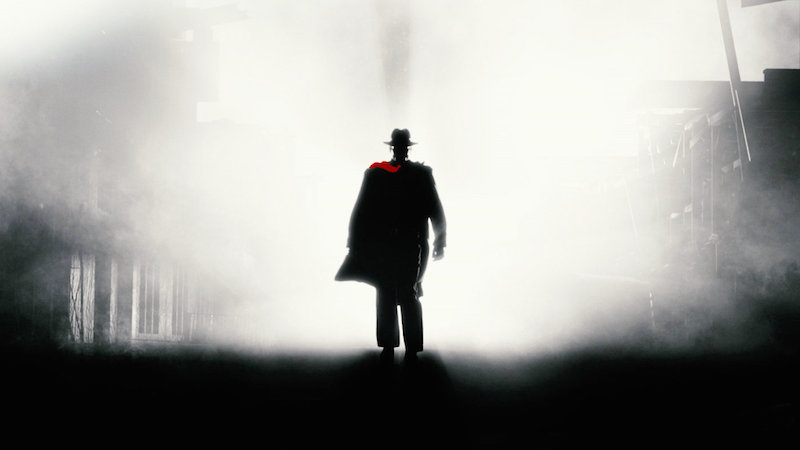
I finally saw Frank Miller's version of The Spirit this weekend. While I never believed that Miller had it in him to stay faithful to Will Eisner's comic book creation, I wasn't prepared to be so bored with the experience. A lot of that could be blamed on the indifferent acting and poor characterization: Whether it was Gabriel Macht's interminable monologues as The Spirit, Samuel Jackson's overacting as the villainous Octopus, Dan Lauria's grousing as the disapproving Commissioner Dolan, or the several interchangeable femme-fatales, the movie's characters are nothing but tedious and cliched.
There was never any great demand for a Spirit movie. The character doesn't have the name recognition of more famous comic book heroes. And unlike other properties adapted into film, The Spirit has always been attached to a very specific milieu. That this film ever saw the light of day was probably due to Frank Miller being involved with it - Which is the point when things became problematic. Not only do Miller's present stylistic ticks conflict with Eisner's humanism despite sharing superficial similarities, Miller is also a rookie director. His stark visual design and framing of shots is similar to the comic panels he draws. But that doesn't mean he knows how to handle actors or pace his story. The result is a monotonously told narrative.
The Spirit not only shares little in common with its source material (No Ebony White, the hero has a healing factor) but shows a lack of synergy between its interpretation and the current comic book re-imagining being published by DC. While comic book fans would like to see this movie buried and forgotten, it's unfortunate that the movie, not the comic, will be for many their first and only exposure to the character.
1/28/2009
Aang is Asian?
 |
| Introspective Aang |
Derek Kirk Kim has been raising a big stink over the controversial casting of caucasian actors for thefeature film version of Avatar: The Last Airbender. While I am a little disappointed with the decision, I'm not really that surprised. For those of you who don't care that much about animation, Avatar takes place in a fantasy world modeled extensively after East Asian culture, with its myriad fighting styles prominently featured. Think of it as the quasi-eastern equivalent of Middle Earth, but a lot more hip. For all it's Asian trappings, Avatar is the creation of two White guys for Nickelodeon. This work, however respectful, was ultimately done in the service of entertaining an American television audience. The fact that Avatar's visual style was strongly influenced by Japanese animation, and voiced in english by a multi-ethnic cast, has only served to further confuse the issue.
The portrayal of Asian characters by White actors has a long tradition in Hollywood that is second to, and almost as embarrassing as, the portrayal of those with African descent. And yet this practice doesn't get as much attention from the media, which may be why it has persisted long after blackface has been buried in shame at least within the U.S. In this historical context the woefully ignorant remarks of Jackson Rathbone, one of the prospective actors, has had the unfortunate effect of reinforcing the entertainment industry's image as culturally insensitive to Asians.
 |
| Annoyed Katara |
Setting aside the present controversy, I found the choice of M. Night Shyamalan for director to be a pretty dubious decision when it was first announced. What makes someone think this hack can direct an epic fantasy aimed at children? Perhaps The Last Airbender will prove to the world that this is the genre Shyamalan has always meant to direct. But the oppressive tone found in many of his films contradicts the lighthearted effect needed for this kind of story. My doubts about his artistic sensibilities have been more a central concern than who gets to play what. But the casting compounds those doubts because it seems to indicate that he was unable, or simply unwilling to challenge pre-existing studio directives or the prevalent Hollywood culture. If this is true, then it's sad that one of Hollywood's most prominent Asians can do so little to change it.
More on Avatar Racebending
1/23/2009
Dramacon

Developing these talents is undoubtedly a long-term effort. Russian born, Canadian educated Svetlana Chmakova is probably the most promising young creator presently active. I thought I'd take a look at Dramacon, her first long-form work. Chmakova seems to have followed the familiar advise of writing what you know, because Dramacon is clearly drawn from real life experiences. The entire story takes place in and around an anime convention - Actually an annual convention held three times within the comic to be more precise. Originally published in three separate volumes, each volume tells the events at one convention. The result of this narrative structure is that despite the large total page count, the character interactions have to be resolved within a smsller deliniated space. Another compromise starting from volume two is that offstage developments - what occurs between the conventions - have to be quickly summarized at the beginning of each volume, which isn't particularly elegant since it highlights the contrived nature of the narrative's serial nature.
In part one Christie Leroux, a high school student and amateur writer, travels to Yattacon with her artist/boyfriend Derek Hollman to promote their self-published book at the convention's artist alley. As a complete newbie, Christie immediately suffers extreme culture shock. But Derek is too much of a jerk to support his clearly distressed girlfriend. Left to fend for herself, Christie literally runs into cosplayer Matt Green. Matt's something of a lone wolf working out his own issues over fear of rejection. Nevertheless he lavishes more attention on Christie in a few minutes than Derek does during the entire con. Christie gradually begins to disengage herself from Derek as she falls in love with Matt.

The romantic plot is nothing new off course, but the chemistry between Christie and Matt is both very charming while containing just enough edge to make their relationship believable. That their romance takes place in an anime convention gives it a heightened surreal quality. Chmakova captures the bustle and energy of the event and neatly summarizes what goes on for the most part. But the convention also serves to frame the extent of the romance. After three days everybody has to return to their real lives.
Aside from falling in love, Christie is also an ambitious writer. Unlike other fledgling talents unable to take constructive criticism, she is open-minded and earnest. She briefly falls under the wing of seasoned professional Lida Zeff - a somewhat idealized comic creator/mentor figure whose encouragement motivates Christie to work harder on her book.
While only the first part of a larger work, volume one of Dramacon actually works well enough as a self-contained romantic comedy: A couple meet, fall in love, and separate in the end. A reader could stop at this point.
In part two there is a noticeable shift in attitude and emphasis. While Matt's new girlfriend prevents Christie and Matt from simply picking-up where they left off, other characters share center stage. Christie is accompanied to Yattacon by new artist Bethany Peters, who replaces Christie as the convention-going newbie. A trio of artist alley tablemates known as Firebird Studios can't help but listen in, and function as a humorous Greek chorus. Despite her inexperience, Bethany's own artistic skills are advanced enough for Lida to personally recommend her to a colleague for some future project. She is however ambivalent about becoming a professional comic artist, not in small part due to familial pressure to enter into a more respectable field. As always Lida shows-up later to give Bethany some sage career advice.

While the convention still retains its energizing effect, the snarkier side of fandom reveals itself to Christie and Bethany. Obnoxious artists, know-it-all fans, unwanted glompers, fussy cosplayers, mean-spirited cosplay haters, message board trollers, all get some commentary. One particularly self-indulgent scene has Lida debate, and win against, an annoying manga purist over the proper definition of manga. Naturally the purist looks to be about ten years old. This particular issue has obvious resonance to Chmakova. There's something heartfelt in her exploration of these aspects of fandom. But her attempts to juggle Christie and Matt's relationship, Bethany's professional aspirations, and myriad facets of the North American manga industry, produce a less focused narrative. By the end of part two, Christie and Matt have been reduced to smaller supporting roles.
The last volume is the weakest of the three. While the Christie/Matt romance finally moves forward after being put on a holding pattern in the last volume, the Bethany arc takes central stage. Her family visits her at Yattacon, which causes her mother to look on disapprovingly as Bethany tries to justify her behavior. Unfortunately there is little space to develop these new characters in this already crowded volume. Thus attempts to reach a satisfactory resolution fall flat not just for the Bethany/mother conflict, but also for the rest of the cast. There's a line uttered which is meant to lampshade another plot point, but could be applied to the conclusion of Dramacon: "This is a little too perfect and convenient. Where is the tension? Where is the drama? I call bad writing.”
Dramacon is still thoroughly enjoyable despite its disappointing third-act. Much of its problems stem from oscillating between the Christie/Matt romance, and the later additional elements which could have been helped with more space. But there's no doubting Chmakova's strengths as a visual storyteller. The art starting from volume one is highly polished, made more impressive when considering that the story takes place in a setting as rich in background detail as an anime convention. Chmakova has absorbed the language of manga - it's expressiveness, rhythm, and energy - and transliterated them into a North American milieu. This is far more sophisticated than mimicking the most superficial aspects of mainstream Japanese comics to reinterpret familiar American characters. I occasional wonder if Chmakova's training as an animator must have something to do with this, because Lida emphatically recommends art school at one point.

For what its worth, Dramacon is a very entertaining effort, and a heartening example for other young, aspiring creators. Hopefully Chmakova's style will continue to mature and deepen. It will be interesting to see whether she and her contemporaries will thrive in the coming years.
Note: The Ultimate Edition collecting all three volumes contains some additional material in the form of a short story that takes place after the events of Dramacon.
Subscribe to:
Posts (Atom)