2/26/2016

The Star Wars

The Star Wars: Story: J.W. Rinzler Art: Mike Mayhew Additional Art: Scott Kolins, Sean Cooke, Killian Plunkett, Stephane Roux, Ryan Kinnaird Colors: Rain Beredo, Dan Jackson Letters: Michael Heisler Covers: Nick Runge, Jan Duursema, Douglas Wheatley, Ralph McQuarrie Design: Jimmy Presler  Star Wars created by George Lucas.
Story: J.W. Rinzler
Art: Mike Mayhew
Additional Art: Scott Kolins, Sean Cooke, Killian Plunkett, Stephane Roux, Ryan Kinnaird
Colors: Rain Beredo, Dan Jackson
Letters: Michael Heisler
Covers: Nick Runge, Jan Duursema, Douglas Wheatley, Ralph McQuarrie
Design: Jimmy Presler

Star Wars created by George Lucas.

(Mild spoiler alert for the entire Star Wars film series)
As with any successful franchise, Star Wars constantly tempts fans to speculate about the inner workings of its creative process prior to the reveal of the finished product. This is further exacerbated by George Lucas and his pronounced habit of constantly revising his own story. Did he always intend to produce six movies or nine? When did he decide to make Emperor Palpatine a Sith Lord? Or settle on the familial connection between Luke Skywalker, Leia Organa and Darth Vader? The franchise is maddeningly slippery to anyone who insists on the existence of eternal truths (e.g. Han Solo shot first!), which sets them in opposition to the equally obstinate Lucas. So it’s not surprising that some people would be curious to read the legendary rough draft to what would become the original Star Wars from 1977, if only just to understand what ideas were percolating within Lucas head at the time. But for those of us who can’t be bothered to track it down, Dark Horse published a graphic novel adaptation back in 2013 written by J.W. Rinzler and drawn mainly by Mike Mayhew.

Needless to say, this is not the story that would go on to conquer the world and change popular culture. The Star Wars is a very workmanlike effort that even more obviously owes a debt to Flash Gordon. Events unfold in a typically serialized manner, with the protagonists facing down one peril after another. It’s often been rumored that the rough draft contained elements for the original trilogy, but this adaptation implies that this is also true for the prequels as well. The setup of the New Galactic Empire conquering the rebellious planet Acquilae mirrors the Trade Federation’s aggression towards Naboo in The Phantom Menace. The attempts to protect a young Princess Leia from Imperial forces anticipate similar actions towards Queen Amidala. The Wookie uprising in the latter part of the comic foresees the participation of the Ewoks and the Gungans in the film series.

The Star Wars: Story: J.W. Rinzler Art: Mike Mayhew Additional Art: Scott Kolins, Sean Cooke, Killian Plunkett, Stephane Roux, Ryan Kinnaird Colors: Rain Beredo, Dan Jackson Letters: Michael Heisler Covers: Nick Runge, Jan Duursema, Douglas Wheatley, Ralph McQuarrie Design: Jimmy Presler  Star Wars created by George Lucas.

But the sprawling structure makes it too unwieldy to work as a feature film. The films would have to compress events and merge characters. No less than four separate people are combined to fashion the Darth Vader fans know and love. It’s not exactly clear how much of Lucas draft informs Rinzler’s script, but the narrative is all plot and zero characterization. Individuals act out not from some internal motive but because they need to do so to move things along. The dialogue is mainly expository with some technobabble intruding into the proceedings. No one possesses any personality of note. So it’s hard to care about what happens to anyone. The reader is only aware when someone is in love because they proclaim it. Some characters make the ultimate sacrifice and their deaths are barely mourned. Others just drop out altogether. The pacing allows no room for quiet introspection. At best, this is uninspired, mechanical storytelling.

None of this does any favors to Lucas half-baked critique of American imperialism. The New Empire, which is somehow different from the previous Empire, is now evil because it persecutes the Jedi and the worlds that harbor them. There are a few attempts to insert some realpolitik that go nowhere. And the portrayal of the Wookies as stereotypical primitives who can be duped into worshipping someone as a god, à la the Ewoks in Return of the Jedi, only demonstrates how much a younger Lucas was a man of his time. For him, anyone who wasn't a droid or a funny-looking alien (Han happens to be big and green) was by default white.

Mayhew and colorist Rain Beredo attempt to insert into the proceedings some much needed vim and vigour, while letterer Michael Heisler employs fonts recalling the classic look of the film. But they can’t overcome the indifferent scripting. The photorealism can even sometimes hinder the flow of the comic due to the regular use of exaggerated but frozen facial expressions. No matter how hard the art team tries to make the characters look and act like actual human beings the reader can relate to, they remain inert and unengaging.

The Star Wars: Story: J.W. Rinzler Art: Mike Mayhew Additional Art: Scott Kolins, Sean Cooke, Killian Plunkett, Stephane Roux, Ryan Kinnaird Colors: Rain Beredo, Dan Jackson Letters: Michael Heisler Covers: Nick Runge, Jan Duursema, Douglas Wheatley, Ralph McQuarrie Design: Jimmy Presler  Star Wars created by George Lucas.

Because of the comic’s origins, the art becomes oddly metatextual. The designs are attempting to recreate the ideas of Lucas and original concept designer Ralph McQuarrie before they acquired their more recognizable onscreen forms. But Mayhew et al. is obviously drawing inspiration from the original trilogy. The end result is a world that gradually appears more familiar as the story progresses, though more retro in feel. It’s as if someone had wiped away all the dirt and grime from the Star Wars universe. Or maybe the dirt and grime had not yet enough time to settle in.

What ultimately distinguishes, or diminishes, The Star Wars in the eyes of fans are the ideas that don’t make it into this version of the story. The Jedi and Sith are ancient enemies, but their feud doesn’t play a central role in the war between the New Empire and the Rebellion. The Sith and the Empire might be allies for the sake of convenience, but the latter barely tolerates the former. Both warrior cults are viewed as moribund institutions being swept away by the modern state. This contempt for the old actually makes its way into the original film, only to vanish when the sequels would reveal that the Sith were actually running the show.

Also nonexistent is the quasi-spiritualism associated with the franchise. While Jedi and Sith are formidable in battle, neither possesses any supernatural abilities. The Force as understood by modern fandom has yet to be conceived by Lucas. There are no sermons about “an energy field created by all living things” binding the galaxy together. Or dire warnings about being tempted by the Dark Side by giving into anger, fear, and aggression. Without The Force, the comic lacks the pseudo-philosophical content that has become an essential part of the Star Wars universe.

Perhaps the most significant absence is of its hero Luke Skywalker. There's a character with that name in the comic, though that’s where the similarity ends. This Luke is a seasoned Jedi warrior. The last of a dying breed, somewhat akin to an aging samurai still in active service after the collapse of the shogunate. Luke's fighting for the status quo he remembers. Noble perhaps, but a doomed cause. He's really more the template for Obi-Wan Kenobi. Quite a a far cry from the Luke the world would come to know as a naive farmboy who desperately wants to leave the farm and his hick family. Who daydreams about adventures in space, and perhaps of a better tomorrow. That’s the aspirational character many fans would embrace.

The Star Wars: Story: J.W. Rinzler Art: Mike Mayhew Additional Art: Scott Kolins, Sean Cooke, Killian Plunkett, Stephane Roux, Ryan Kinnaird Colors: Rain Beredo, Dan Jackson Letters: Michael Heisler Covers: Nick Runge, Jan Duursema, Douglas Wheatley, Ralph McQuarrie Design: Jimmy Presler  Star Wars created by George Lucas.

2/14/2016

Lulu Anew

Lulu Anew by Étienne Davodeau Translation: Joe Johnson Letters: Ortho.
by Étienne Davodeau
Translation: Joe Johnson
Letters: Ortho

The central conceit of the midlife crisis is that it's often used as an excuse to engage in melodrama. The protagonist chucks their stifling responsibilities and rigidly defined social roles in order to indulge in the kind of youthful indiscretions that they’ve generally avoided in the past. Or in more recent stories, as a chance to launch into a personal quest for self-actualization. Throw in some unsympathetic parents, small-minded acquaintances, or an uncomprehending spouse/significant other, and the elements are in place to send the hero on their merry way. The eponymous protagonist of Lulu Anew starts out in the usual pattern. Lulu is a French housewife and mother of three attempting to return to the workforce. But after going through another unsuccessful job interview, something about coming back to her lout of a husband causes her to hesitate. Before long, she's gone on a walkabout to the Coast without any concrete plans and without informing anyone.

If this sounds like the setup for American Beauty or Eat Pray Love, Lulu Anew couldn’t be further away from those predecessors. Unlike her American counterparts, Lulu isn't trapped in some materially comfortable but emotionally hollowed out middle class existence. Affluence is definitely not an issue for her. From all appearances, she needs the money to support her family. And a job would allow her to escape the confines of her claustrophobic domestic situation as a put upon housewife. But Lulu can’t actually afford to run away from home. She only manages to survive by relying on the kindness of strangers.

And unlike Hollywood’s screen idols, there’s nothing glamorous about Lulu. Étienne Davodeau draws in the Franco-Belgian tradition, which grounds the otherwise unlikely story in a naturalistic setting. Most of his adult characters look like they’re at least middle aged, with eye bags, wrinkles, frown lines, and flabby bodies. Lulu herself is hardly the vision of beauty with her flat unattractive features, drab clothes and unkempt hair tied back into a utilitarian knot. There’s an unmistakable working class bearing to Davodeau’s cast. At some point, Lulu acquires a love interest in the form of an ex-con trailer park groundskeeper named Charles. He vaguely recalls a schlubby Harvey Pekar as drawn by Robert Crumb, but with the addition of a pair of unfortunate sideburns. That’s nothing compared to his hairier two brothers who live in the park with him.

Lulu Anew by Étienne Davodeau Translation: Joe Johnson Letters: Ortho.

The book’s other main character is the placid French coastline. Drawn with virtuosity by Davodeau, the setting’s warm orange and cool blue color washes define the overall palette. While the book's page layout uses the twelve panel grid, Davodeau often employs silent action sequences to punctuate the narrative. The further Lulu travels, the more often the panels open up to wide angle shots of the distant horizon. The natural beauty of the landscape beckoning her into a state of wordless introspection as she watches the waves quietly roll onto land.

This tranquil mood keeps the book from wallowing in cheap sentimentality. Lulu doesn’t betray any unambiguous emotions about her rash decision to leave her family such as guilt, remorse, or joy and relief. She doesn’t pursue any unfulfilled ambitions, engage in bucket-list inspired feats of daring, or travel to exotic places. Her interactions with the locals are a lot more low key, and the personal revelations about what drives her come gradually.

The narrative is actually told from the perspective of Lulu’s friends and family. The story begins with several of them gathered around a table at dusk, for reasons only revealed at the end of the book, trying to piece together the events into a cohesive whole. While some convey the fallout from Lulu’s sudden disappearance, one particular friend named Xavier and Lulu’s teenage daughter Morgane supply much of the story’s spine. They’re generally a relaxed group. And their attitude exerts a powerful pull on the book’s mood. While they don’t all necessarily agree with Lulu’s behavior, they approach the events from the standpoint of inquiry rather than of judgement. As the conversation unfolds, each member drops subtle hints about the unhappiness that might have contributed to the commencement of Lulu’s journey.

Regardless of where the reader falls on the wisdom (or lack) of her actions, Lulu Anew taps into a strain of discontent that comes from living a circumscribed life, and the need to occasionally rebel against it by searching for the liminal.

Lulu Anew by Étienne Davodeau Translation: Joe Johnson Letters: Ortho.

1/30/2016

Ultraman Vol. 2

Ultraman Vol. 2, Story: Eiichi Shimizu  Art: Tomohiro Shimoguch.i  Ultraman created by Eiji Tsuburaya & Tsuburaya Productions.
Story: Eiichi Shimizu 
Art: Tomohiro Shimoguchi

Ultraman created by Eiji Tsuburaya & Tsuburaya Productions

The second volume of the Ultraman manga reboot is paced exactly like the previous one, with smaller scenes building up to a massive decompressed fight beginning at the halfway point. But the action begins sooner, even as the manga continues the process of reintroducing elements from the original TV series while expanding the cast of supporting characters. In the last volume, it was revealed that original Ultraman host Shin Hayata had been permanently altered by his time bonding with the Giant of Light so that he retained a portion of the mysterious alien’s powers. Even more inexplicably, he passed those abilities on to his only son Shinjiro. Now that Shin has been injured in his battle with old nemesis Bemular, will Shinjiro take up the mantle of his father and continue to defend the planet from alien threats? This volume gives a definitive answer, but not before raising a whole host of thorny issues about the new Ultraman’s true purpose. Volume one ended with the introduction of this strange being:

Ultraman Vol. 1, Story: Eiichi Shimizu  Art: Tomohiro Shimoguchi,  Ultraman created by Eiji Tsuburaya & Tsuburaya Productions

Fans of the TV series will recognize this Edo to be a member of a race of evil aliens who were once Ultraman’s mortal enemies. So why is he not just a member of the Special Science Search Party, a.k.a the Science Patrol, but actually the one giving the orders? Since when has the SSSP become a covert organization, with its own complement of Men in Black covering up the existence of aliens? And how does Shinjiro fit into their plans?

The people who will probably end up helping him in getting to the bottom of this conspiracy are Endo, a determined police detective, and Rena, a teen idol and Ultraman superfan. Acting as foil is taciturn SSSP agent Moroboshi. At this point, everyone’s personality is broadly defined. Endo’s dislike for blindly following orders is going to get him into trouble with the bad guys. Rena’s nothing more than a damsel-in-distress and potential love interest. And Moroboshi is a dick towards Shinjiro because he’s the workplace newbie. Shinjiro himself still lacks any agency as the reluctant hero following in his father’s footsteps. He’s likeable in his desire to do the right thing, which makes it easy for Edo to manipulate him.

The most obvious departure from the entire franchise is that the new Ultraman is no longer the result of a magical transformation. Shinjiro has to don an armored suit built by the SSSP to fully replicate all of Ultraman’s superpowers. This has a number of significant consequence for the manga. This Ultraman now works for The Man, so he loses most of his customary independence. Gone is the larger-than-life kaiju-battling action, replaced by street-level violence. Shinjiro has to spend half the time worrying about keeping the fight away from innocent bystanders or rescuing trapped civilians. And the now human-sized enemies behave more like criminals and terrorists attempting to blend into the general population than traditional world-conquering villains. The true big bad could be hiding anywhere, including the SSSP. This is a superhero for a more paranoid era.

1/23/2016

Just So Happens

Just So Happens by Fumio Obata.
by Fumio Obata

In the debut graphic novel of Fumio Obata Just So Happens, Japanese transplant Yumiko has made the city of London her home for the last several years while working at a design firm. As she walks to work, she monologues about preferring the “noise, chaos, busyness, energy, and openness…” , and in being immersed in a place crammed with different lives “with different roots and cultures.” To emphasize her point, Obata (he is also a Japanese transplant living in Great Britain) pulls back to reveal a bird’s eye view of Yumiko surrounded by London’s varied denizens. Yumiko exultantly proclaims “And somehow I managed to create my own little space too.” This is the familiar claim of any immigrant who has done good. But there’s a price to pay for her successful assimilation. Whenever she spots her compatriots on those crowded streets, Yumiko subconsciously recoils from their presence. It takes her boyfriend innocently pointing this out for Yumiko to notice, and she becomes flustered at her own behavior. Soon enough, Yumiko is forced to confront her discomfort when a sudden death in the family forces her to return to her home country in this elegant and understated story about how hybrid cultural identity functions within a globalized framework.

These themes have been tackled before by Adrian Tomine and Gene Luen Yang. But there’s less interest in how racial discrimination divides mainstream society from immigrant communities which looms large with Obata’s American counterparts. Neither does he explore the politics of escaping from the repression of the old world found in Marjane Satrapi. Obata eschews those stark binaries. What is going on in his story is much more mundane and personal. At first glance, Yumiko has very little in the way of defining characteristics. Her ability to blend into her environment has made her fairly unremarkable. But as she performs her duties during the funeral service, her experience of reverse culture shock leads to some very subtle changes over the course of the book. She looks on with dismay at the many petty details of the ceremony she has to deal with, initially rejects the customs of a culture now alien to her, only to later reassess how her relationship with her separated parents contributed to her decision to study, then later work abroad. In the end, there are no overt changes or melodramatic conflicts. Just a quiet rapprochement with the country and family Yumiko had long believed she had long outgrown. In its interiority, JSH possesses a meditative autobiographical quality.

Just So Happens by Fumio Obata.

If the story sounds a little too thin, much of its emotional impact comes from the wonderful art which combines European-style illustration with Japanese aesthetics and subject matter. Obata’s meticulous ink lines are overlaid with luminous watercolor washes to produce an impressionistic effect. Once the story moves to Japan, the results are almost magical. The setting is rendered with a quiet dreamlike quality, particularly the abstract-looking mountainous landscapes. As much as Yumiko feels disconnected from her surroundings, it’s virtually impossible not to feel a little captivated by the country’s natural and architectural beauty. Obata does like to regularly pull away from his characters and view them from overhead. This transforms the ordinary urban settings they inhabit into a strange floating world.

Given that much of the story takes place inside Yumiko’s head, the most important character after her, not to mention its most prominent visual motif, is a masked Noh theater performer whose act she once witnessed during a summer festival. Drawn to the performer’s ability to balance stillness and dynamism, fierceness and control, Yumiko is haunted by its ghost when she returns to Japan. Her own detached sorrow during the funeral becomes mirrored by the anonymity of the performer’s mask, as well the slow, mournful and ambiguous gestures. The theater's restrained beauty and codified movements exquisitely captured by Obata are an expression of a search for a transcendental realm which subsumes the individual ego. As she struggles to separate her own desires from the conflicting advice offered by her mother and father on how to live her life, the performer invades her space, and she intermittently enters into the spiritual plane where she comes face-to-face with not just the performer, but her own previously unacknowledged emotional turmoil. These are the most intense scenes within the book, and Obata’s otherwise cool palette becomes warmer, harsher and more vivid.

And afterwards, Obata offers no grand theories or sweeping statements addressing the turmoil experienced by many transplants arising from their liminal status. Only simple observations perhaps drawn from his own life. These are lessons he finds best explored through the eclectic language of a visual artist.

Just So Happens by Fumio Obata.

Webcomic: Some Other Animal's Meat

Some Other Animal's Meat by Emily Carroll.

1/08/2016

Star Wars: Shattered Empire

Story: Greg Rucka Art: Marco Chechetto, Angel Unzueta, Emilio Laiso, Phil Notto Colors: Andres Mossa Letters: Joe Caramagna  Star Wars created by George Lucas.
Story: Greg Rucka
Art: Marco Chechetto, Angel Unzueta, Emilio Laiso, Phil Notto
Colors: Andres Mossa
Letters: Joe Caramagna

Star Wars created by George Lucas

Journey to Star Wars: The Force Awakens: Shattered Empire is one of the media tie-ins to the The Force Awakens written by Greg Rucka covering the thirty year gap since the end of Return of the Jedi. While the four issue series does feature the main protagonists from the older film, its purpose is to set the stage for the events of TFA via the introduction of a few new characters who will never be seen or heard from again. Their personal connection to one of the film's cast members will be immediately recognizable to anyone who’s seen TFA . But as with most tie-ins, the revelation is more of an afterthought retrofitted into the timeline with no noticeable effect.

If the comic drives home one point, it’s that the conclusion of ROTJ didn’t spell the end of hostilities between the film’s two warring factions: The Empire and the Rebel Alliance. The story begins in media res with the final stages of the fateful Battle of Endor, but seen through the eyes of a young married couple. Shara Bey is a crack A-wing fighter pilot participating in the Rebel Alliance attack on the second Death Star, while Kes is one of the commandos led by Han Solo during the concurrent ground assault on its force field generator. They're reunited at the victory celebrations on Endor, and begin to look forward to civilian life and raising a family.

It's not long before those plans are put on hold. Now on the losing side of the intergalactic struggle and acting on posthumous orders from Emperor Palpatine, the scattered Imperial forces are nevertheless determined to make the Alliance pay dearly for every world they liberate. Shara and Kes are separated for such long stretches by their respective deployments that Shara begins to feel torn between her loyalty to the Alliance and her desire to lead a more peaceful existence. The comic arrives at a satisfactory solution to the couple's predicament in the end, while leaving the greater conflict between good and evil still very much in the air since this is something being addressed in the film.

Naturally, the story contains a number of continuity nods. The more obvious ones include a mission to wrest the planet Naboo from the Empire led by Leia Organa which acknowledges The Phantom Menace as officially still a part of the Star Wars canon. Then there’s a mission led by Luke Skywalker to retrieve a sacred Jedi object which references The Clone Wars and foreshadows his enigmatic role in TFA. These actions might still have repercussions in the upcoming films of the franchise or, as more likely the case, they could just be empty filler. But within the context of the comic alone, their plot threads are largely disconnected from one another. The more established characters Han, Leia and Luke et al, aren’t clearly fleshed-out, dependent largely on readers’ pre-existing emotional investment from watching the original Star Wars trilogy.

If there’s any reason to buy this comic, it’s the gorgeous Star Wars space battle porn. A few other artists get involved, and the resulting visual contrast in their styles can be jarring. But Marco Chechetto handles the bulk of the pages. His interpretation of faces can come across as a little too smooth and static, but he possesses a serious command of the futuristic technology, especially the franchise’s numerous spaceships. His action set pieces are densely packed without sacrificing legibility. And his art lends a certain grittiness that enhances the impression of a lived-in universe vital to the franchise. Colorist Andres Mossa holds things together with a subdued but eerily artificial palette that bathes the technology in fluorescent blues and the natural world in umbers and sepias. Overall, Chechetto and Mossa come closer to replicating the visual aesthetic of the film than any of the other artists presently working on the various Star Wars comic titles.

12/27/2015

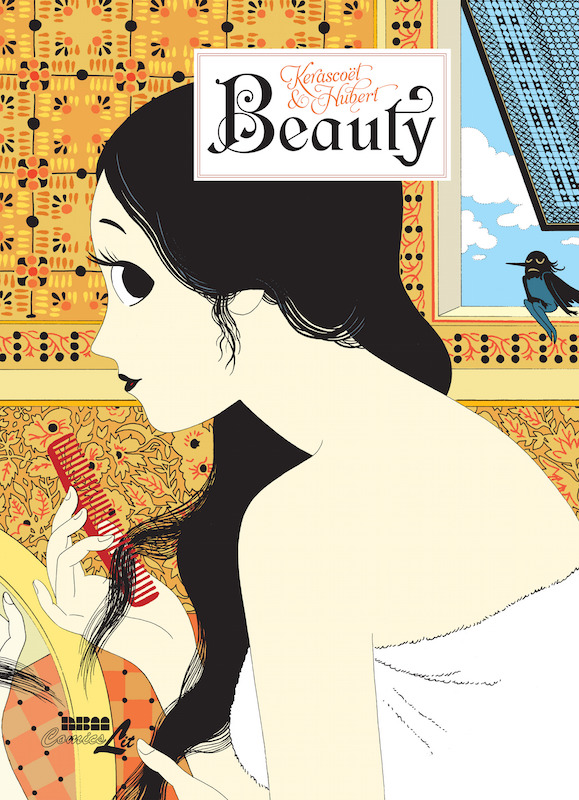
Beauty

Beauty, Story: Hubert Boulard Art: Kerascoët (Marie Pommepuy and Sébastien Cosset) Letters: Ortho Translation: Joe Johnson.
Story: Hubert Boulard
Art: Kerascoët (Marie Pommepuy and Sébastien Cosset)
Letters: Ortho
Translation: Joe Johnson

At first glance, Beauty looks like a classic “Be careful what you wish for” story. In these type of stories, the protagonist comes to regret a wish that has come true because its fulfillment exposes terrible unforeseen consequences. Or something essential has to given up in the bargain. Or the manner in which the wish has come true was less than ideal. This usually leads to either a tragic ending, or more innocuously a successful reversal of the wish. In the latter, the hero comes away chastened by the experience. It's ultimately a genre with a conservative message. The graphic novel Seconds was a modern use of this trope. In comparison, Beauty contains more traditional elements. It starts out as a mashup of the myth of King Midas with Cinderella. But writer Hubert and husband and wife art team of Kerascoët subvert the morality of the tale and turn the wish into a catalyst for personal growth and eventually greater actualization. Though not before the experience puts our heroine through the wringer.

The comic’s setting is the pseudo-medieval Europe of most fairy tales and fantasy novels. Kerascoët brings this world to life with the characteristic use of Ligne claire, bold, flat colors, and nonlinear perspective images, neatly composed on each page as a four panel high-tiered grid. The effect is a dense visual narrative which is far more iconic than realistic. This enhances the impression of an exotic world populated by mysterious magical forces. The character designs conveniently fit into easily-recognized archetypes: the poor peasant, the handsome knight, noble king, beautiful queen, or violent warlord.

Beauty, Story: Hubert Boulard Art: Kerascoët (Marie Pommepuy and Sébastien Cosset) Letters: Ortho Translation: Joe Johnson.

This artistic choice serves the comic’s key narrative device. The heroine is a poor, put-upon girl named Coddie who is on the verge of womanhood. One day, she inadvertently frees the fairy Mab from a magical prison and is granted one wish as a reward. Coddie wants to be beautiful, but Mab cannot change her. Instead, she imparts on Coddie a glamour which creates the illusion of beauty to whoever sets eyes on her. As such, the story is constantly shifting between Coddie’s true form and her idealized appearance. Coddie is aware of her physical imperfections every time she sees her own reflection, but this also highlights her pettiness, superficiality, and shortsightedness. To everyone else, her ethereal visage simply disarms any valid objections to her questionable behavior. Kerascoët’s art easily conveys how when even in the company of other attractive people, Coddie’s illusory charm makes her seem otherworldly in comparison.

The disadvantages of being an incarnation of the feminine ideal becomes quickly apparent when shortly after her encounter with Mab, Coddie is spotted by several of her male neighbors and they later try to gang rape her. The women react to this incident by driving Coddie out of the village. It doesn’t take long for Coddie to become a Helen of Troy object of desire as people either woo, worship, and fight for her approval. Or alternately attempt to manipulate, capture, imprison, possess, or consume her. As her legend grows, so does the chaos accompanying her until it threatens to engulf the entire kingdom.

Beauty, Story: Hubert Boulard Art: Kerascoët (Marie Pommepuy and Sébastien Cosset) Letters: Ortho Translation: Joe Johnson.

But Coddie isn’t an impassive figure. The granting of her wish connotes an obvious sexual awakening. So she behaves like an adolescent who suddenly becomes aware of the power she holds over the opposite sex. Coddie seduces a succession of powerful men as she moves up the social ladder. But unsurprisingly, she exhibits poor judgement and self-control. And her naive understanding of love and adult relationships causes greater misery for her lovers and the people around her.

Hubert and Kerascoët infuse the story with a number of modern touches. They don’t ignore the harsh social inequalities between peasant and nobility, not to mention the patriarchal nature of the feudal system of government. As a commoner, Coddie is easily tempted by the lavish lifestyle of the aristocracy. But unlike the typical fairy tale heroine, she doesn’t live happily ever after once she marries into royalty. Two other noble women in the story are forced to treat Coddie as a rival or a threat because of the inordinate amount of influence she exerts over the men. At some point, even the peasants (or at least the peasant women) turn on her after her attempts to alleviate their suffering backfires. There’s only so much one can accomplish when being viewed more as an object than a person. While not as blunt as Game of Thrones, the book's depiction of violence and misery can be fairly graphic at times.

Beauty, Story: Hubert Boulard Art: Kerascoët (Marie Pommepuy and Sébastien Cosset) Letters: Ortho Translation: Joe Johnson.

Indeed, everything has gone wrong for Coddie past the midway point. But where most traditional storytellers would have been content to leave off with a cautionary tale about accepting one’s limitations, this is when Coddie begins to apply the harsh lessons of her life and gradually fights back. By the end she attempts to turn the tables on her tormentors and strikes a crucial balance. The results don’t necessarily violate the rules of the comic’s fantastic milieu, but the story's concluding point is persuasively up to date.

12/25/2015

More NonSense: The Force Awakens

Star Wars: The Force Awakens (2015), Director: J.J. Abrams, Writers: Lawrence Kasdan, Michael Arndt, et al., Stars: Daisy Ridley, John Boyega, Oscar Isaac, Adam Driver, Harrison Ford, Mark Hamill, Carrie Fisher, et al.

Star Wars: The Force Awakens came to movie theaters very recently, and the overwhelming positive reaction to the film is for our modern fandom the closest equivalent to a religious revival. Indeed, the film's title promises as much, possessing the most metaphysical wording from all the seven in the series. Of course, there's a great deal riding on the film's financial success, but spiritual longing has always been intertwined with worldly self-interest. And for better or worse, the world's most beloved Geek properties are already in the hands of massive, mostly uncaring organizations who stand to reap the greatest profit.

Off course, what's exciting to fans is the symbolic handoff of stewardship from franchise creator George Lucas to Disney. For almost forty years Lucas has steered Star Wars in accordance to his own personal dictates, both to great acclaim and heartfelt derision from fans and critics alike. He's given up ownership and responsibility for the franchise on more or less his own terms. And now Disney has just released a film with the purpose of fulfilling the deepest longings of Star Wars' most ardent worshipers by following in the steps of the Lucas of the original trilogy, while washing away the stain of the Lucas of the prequels and special editions. The fandom/religion/cult/movement had officially outgrown its founder.

As someone who saw the original trilogy during its initial theatrical run, Star Wars to me has always been synonymous with George Lucas. I'm somewhat disappointed that this occasion could have been used to make a more well-rounded appreciation of his accomplishments. But unlike some other old-timers, I've been fine with the film series continuing without him. For all its flaws, I really enjoyed TFA. Besides, a continuing Star Wars universe could use an Emo antagonist, a conscientious war objector who also happens to be black, and a kickass heroine who doesn't need anyone holding her hand. And all things considered, the original cast didn't look too bad. Face it - once TFA was in the works, the heroes of the original trilogy were probably going to lose their happy ending.

Star Wars: The Force Awakens (2015), Director: J.J. Abrams, Writers: Lawrence Kasdan, Michael Arndt, et al., Stars: Daisy Ridley, John Boyega, Oscar Isaac, Adam Driver, Harrison Ford, Mark Hamill, Carrie Fisher, et al.

And here for your reading pleasure are a few Star Wars links:

Yours Truly:
I haven't spent a lot of time discussing the franchise on this blog, but I did write reviews for a few Star Wars books: Darth Vader and Son and Vader’s Little Princess and Star Wars: Splinter of the Mind's Eye.

Martial Arts:
How Yoda Helped to Invent Kung Fu
Can Donnie Yen Bring Kung Fu (Back) to the Star Wars Universe?
Sword vs. lightsaber: How the Samurai warrior inspired the Jedi Knights

Comics:
The Long, Complicated Relationship Between Star Wars and Marvel Comics

Popular Entertainment and Culture:
How “Star Wars” changed the world
How Star Wars Helped Create President Reagan
The Force Awakens shatters records but can it also save Hollywood?

Gender:
Why Retiring the Slave Bikini From ‘Star Wars’ is Excellent News
Please Stop Spreading This Nonsense that Rey From Star Wars Is a “Mary Sue”
“Star Wars” doesn’t have a heroine problem: Arguing over whether Rey’s a “Mary Sue” is missing the point
Some thoughts on Carrie Fisher

Race:
How Well-Meaning Tweeters Trended a Hateful Star Wars Hashtag
How 2 racist trolls got a ridiculous Star Wars boycott trending on Twitter

The Canon:
The Complete New ‘Star Wars’ Canon Timeline 
A Brief History Of Star Wars Canon, Old And New
Everything We Know About Star Wars' Post-Return of the Jedi Future
What The Force Awakens Borrowed From the Old Star Wars Expanded Universe
A Not-So-Brief History of George Lucas Talking Shit About Disney’s Star Wars
George Lucas criticizes “retro” feel of new Star Wars, describes “breakup”

The Prequels:
Not all the “Star Wars” prequels suck: Revisiting “Revenge of the Sith”
What It Would Take For ‘The Force Awakens’ To Redeem Star Wars
Kylo Ren Is Everything That Anakin Skywalker Should Have Been

The Latest Film:
Your Star Wars spoiler zone: Ars fully discusses The [REDACTED] Awakens
33 Questions We Desperately Want Answered After Star Wars: The Force Awakens
some thoughts on Star Wars: The Force Awakens: Rey
some thoughts on Star Wars: The Force Awakens: Kylo Ren
some thoughts on Star Wars: The Force Awakens: Finn
Some thoughts on Star Wars: The Force Awakens: Poe Dameron and General Hux
Pop Culture Happy Hour Small Batch: The Very Spoilery 'Star Wars'

The Nerds Talk:
Blue Milk
Stephen Colbert Explains Star Wars To Non-Fans
Weather Presenter Makes 12 Star Wars Puns In 40-Seconds
Which character is going to have the most fanfic?
The “Star Wars” fandom menace
From “A New Hope” to no hope at all
The K Chronicles: Star Wars
Tom the Dancing Bug: Chagrin Falls

12/19/2015

Racebending Iron Fist

Iron Fist: The Living Weapon #1, cover by Kaare Andrews.
Cover excerpt from Iron Fist: The Living Weapon #1

This is a response to an editorial written by Alexander Lu regarding rumors about the possibility of casting of an Asian-American male to play the part of Iron Fist. Lu’s objections are understandably about not wanting to perpetuate the “Asians know martial arts” stereotype. ‘It is almost as if someone took a look at the upcoming Marvel slate and said “oh look, Iron Fist. He has martial arts skills. Perfect time to diversify casting by bringing an Asian guy in…because they are good at martial arts, right?” This train of thought speaks to how subtle and subversive cultural stereotyping can be in an era where overt racism has become much more subdued ... it is definitely not worth the perpetuation of a long beholden stereotype’ Lu proclaims. He also mentions that Iron Fist is a C-list character and any attempt to recast him as Asian won’t be greeted as cause for celebration as a major character like when Miles Morales became Spider-Man. It would be better to rally behind certain newly-minted, popular Asian American characters, such as fan-favorite Amadeus Cho.

I find this part of Lu’s argument to be his weakest point. Who’s to say that Iron Fist won’t become a more significant lead character once he makes the transition to the screen, just like other C-Listers Jason Quill, Jessica Jones, Nick Fury, or Scott Lang for that matter. They all received a huge bump in name recognition from when they were simply confined to the pages of the comics. And sure, it would be nice if Amadeus Cho and any other character originally written as Asian were to receive similar treatment instead of racebending a pre-existing character like Iron Fist or Daredevil or Spider-Man. But I’m not sure why pursuing one desirable course of action has to exclude the other? Shouldn’t all options be put on the table?

And there is a pretty good reason to fight for an Asian American Iron Fist specifically, or at least as good a reason as any. Namely it’s the very problematic nature of Danny Rand as a white savior figure. According to Lu, “When Marvel and DC Comics hear cries for diversification, their first instinct is to turn to legacy characters like Red Wolf and Shang-Chi, Master of Kung Fu. Even with good intentions, these heroes simply do not cut it because their histories are fraught with cultural and racial tension.” He then goes on to explain how the new Ms. Marvel - Kamala Khan, successfully uses her “heightened abilities to serve as metaphors for very human experiences– not feeling like you belong as a minority…” Well, it seems to me that an Asian American (or even a biracial) Iron Fist would not only get past the white savior trope, it could also be used to examine similar themes found in Ms. Marvel. I’m disappointed that Lu seems closed-off to those possibilities. Given that Marvel intends to produce an Iron Fist series for Netflix anyway, not asking Marvel to consider an Asian American actor to fill the role feels at the very least like ignoring the issue.

And when it comes to the issue of onscreen Asians practicing martial arts, I think this needs to be approached with more nuance than being forced to choose between the two unsavoury options of white savior or pigeonholing Asians as martial arts masters. Regarding the latter, 2015 has been a watershed year for Asian representation in the American media. It’s not perfect, but Asians are starting to break away from traditional stereotypes. These shows aren’t simply re-inventing Enter the Dragon. And any role filled by an Asian actor no longer bears the brunt of being “the one” to represent the entire Asian American community to the mainstream audience. That would include a theoretical Asian American Iron Fist series. Not everyone with an Asian background knows kung fu or karate anymore than every Caucasian knows how to box and wrestle. Martial arts are a part of the Asian cultural mileau. But the more varied and well-written the onscreen roles played by Asian talents, the less entrapping the image of the Asian martial arts master.

But the martial arts genre in the West tends to be somewhat marginalized. Like superheroes before them, the martial arts films that came out of Hollywood after the kung fu craze developed a reputation for being cheaply-made, disposable crap. And if anything can perpetuate harmful stereotypes about any race or culture, it’s the image of simplistic, poorly-conceived, incompetently produced films featuring actors sleepwalking their way through forgettable characters. Doesn't that contribute to the negativity surrounding the trope of the Asian martial arts master? With some exceptions, live-action martial arts fiction has generally faded from the small screen, which is kind of a shame since the martial arts genre is a lively component of popular Asian media, whether it’s wuxia novels, kung fu movies, or anything produced in Japan featuring ronin and ninja. Having an Asian American Iron Fist won't be enough if the series itself unquestioningly preserves some of the source material’s orientalist assumptions. The Western martial arts genre could use a bit of evolution, given added depth and richer characterization in order to deconstruct a few old-fashioned formulas and be made more relevant to a modern, diverse audience.