10/31/2013

My Halloween

PC Weenies by Krishna M. Sadasivam
Go to: PC Weenies by Krishna M. Sadasivam

After a very long installation process (which included an eleven hour download), Mavericks is finally running on my MacBook. Almost all software but my scanner driver is compatible with the new OS. So hurry up with it Epson.

10/18/2013

Mind MGMT #8-12

Mind MGMT #9 Created by Matt Kindt.
Created by Matt Kindt.

No one could ever accuse Mind MGMT of being easy reading. Its first story arc “The Manager” took full advantage of the comic book format to simultaneously present multiple streams of information. Every piece of real estate is crammed with data: The covers, margins, even the marks on the pages. Needless to say, the story benefits from a multiple careful readings and a willingness to find hidden patterns in all the visual cacophony. Add to that, there’s the cruel irony in returning its protagonist Meru back to square one at the end of the arc, wiping all her memories of the events. “The Futurist” is no less dense a narrative. It’s primary advantage is that to the reader who’s made the effort, this second arc is made easier by being an extension of the first, expanding on the information already gleamed and moving the story forward with new revelations and characters. Both form into one huge chunk of a story, and a more rewarding experience than most of the conspiracy-laden serials that have lately become popular television fare.

At the heart of Mind MGMT is Meru. While she started out investigating “Amnesia Flight #815,” which led to her uncovering the activities of the clandestine Mind MGMT and its top agent Henry Lyme, the comic kept dropping hints that Meru herself has a mysterious past and vast untapped psychic abilities. Much of the dramatic tension comes from the fact that she’s largely dependent on Henry to find the answers but the reader is already aware that he is not to be trusted. As the two set about gathering the ragtag crew of former agents (see my review of #7), it becomes apparent that his former colleagues don’t completely trust him either. Nonetheless, they end up forming a kind of substitute family to Meru, particularly the world-weary Duncan, the titular futurist. His codename comes from his ability to instantaneously read the minds of those around him for up to a 15 mile radius, which has the effect of allowing him to perfectly foresee all their short-term future actions. For Duncan, this clairvoyance has made his life and relationships dull and predictable. The character was introduced way back in the first issue, but now provides a skeptical counterpoint to Henry’s manipulations. When the comic presents his unhappy backstory, his thoughts and impressions are cataloged on the side of the pages next to the panels instead of integrated into the image, unlike in most comic books.

Mind MGMT #10 Created by Matt Kindt.

But what occupies the margins in the earlier chapters are excerpts from Meru’s true-crime book “Premeditated,” which tells the story of a woman named Julianne Verve who murdered her husband and two children. The words in the book uncannily mirror the actions in the panels. And as Meru’s quest progresses, this interaction makes increasingly evident that her personal connection to Mind MGMT predates her own investigation of it. But since so much text is strangely not incorporated into the panels as captions but pasted on the side, the overall effect is not that of a work created by a singular vision but an assemblage of story clippings pasted together. This impression is further compounded by the treatment of the comic pages themselves. As with The Manager, the pages in The Futurist draw attention to the use of the  comic book format by employing blue border markings similar to those found in illustration boards. A few pages have been torn out while others have been mysteriously redacted. The comic itself is an imperfect document - incomplete, heavily edited, and an unreliable record of events. Much like the works fashioned by Mind MGMT's powerful psychics.

Even though Mind MGMT seems to relish drowning the reader in a mass of information, the plot as narrated within the comic proper is actually very propulsive - an exciting globe-trotting adventure that takes its cast from around the United States to North Africa, to the legendary Shangri-la -  Mind MGMT’s secret headquarters hidden amongst snow-capped peaks. And for those with enough patience, the payoff answers a few questions about Meru, which finally has her stepping out of Henry Lyme’s shadow.

Mind MGMT #12 Created by Matt Kindt.

10/13/2013

Advertising Classic: Star Wars Teaser Trailer

Go to: Star Wars (via Lauren Davis)

I don't have to imagine hard that it's 1976. Just remember back to the time when Star Wars had just hit the scene. As someone who loves the film itself but isn't too interested in the whole "Star Wars Universe", I'm still kind of dumbstruck to have witnessed a pop culture phenomenon emerge from a naive fantasy about tie fighters, Death Stars, lightsabers, space smugglers, Jedi, Jawas, and that quasi-religious vaguely New Age invocation "May the Force be with you."

Not bad for a homage to those Flash Gordon serials.

10/09/2013

Photo Mash-up: War Photography X Vintage Comics Project

War Photography X Vintage Comics Project by Butcher Billy
Go to: Behance, by Butcher Billy (via Mark Kardwell)

Remember when Man of Steel was harangued for its Apocalyptic/ 9-11 imagery? This controversial project will be inevitably criticized for tastelessly mixing harrowing real-world events with silly, juvenile superhero fiction. It also highlights the photographic medium's inauspicious status as fodder for so much appropriation in postmodern art and design. A situation only exacerbated in the age of Google Image Search and Instagram. The photographs Butcher Billy chose are some of the most memorable images ever produced in the Twentieth Century, which is what helps make this project immediately disturbing, and so though-provoking.

10/03/2013

Webcomic: Ayn Rand

Ayn Rand by Darryl Cunningham
Go to: act-i-vate, by Darryl Cunningham (via Heidi MacDonald)

You might laugh at her, but chances are you'll meet a few people who act this way during your lifetime. Batman during the 90s, for example.

After reading Ayn Rand, I'm looking forward to Supercrash.

9/26/2013

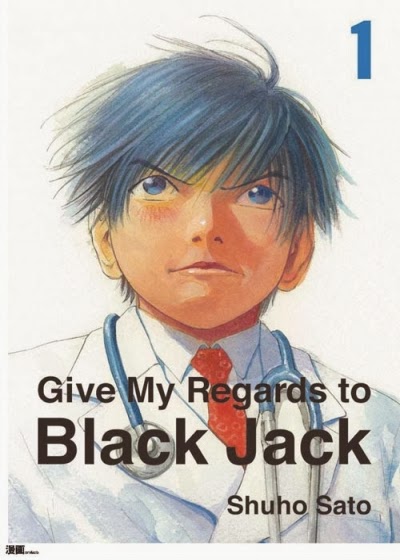
Give My Regards to Black Jack Vol. 1-3

Give My Regards to Black Jack Vol. 1 Created by Shuho Sato Give My Regards to Black Jack Vol. 2 Created by Shuho Sato Give My Regards to Black Jack Vol. 3 Created by Shuho Sato
Created by Shuho Sato

Having given the nod to Osamu Tezuka’s classic creation, Give My Regards to Black Jack goes in a different direction from its predecessor. While they both have a doctor as their main protagonist, the latter series is set in the more down-to-earth milieu of Japan’s healthcare system. The manga’s intent of exposing its flaws falls into familiar territory of the individual fighting a corrupt system. It’s a curious blend of serious social critique and manga tropes.

Author Shuho Sato front-loads the story with a bevy of statistics in order to impress on the reader the true scale of the country’s health care industry. Eight thousand students graduate from medical school annually and go on to become interns for two years at various teaching hospitals. Interns are overworked and underpaid, forcing many to take up part time jobs elsewhere despite a chronic lack of sleep. Our hero Eijiro Saito graduated from Eiroku University, the manga’s equivalent to Harvard, and is interning at the university hospital. The guy starts his career full of pep, boasting of surviving on only two hours of sleep a night. But he’s dirt poor, so he moonlights at the E.R. of an affiliated hospital. While there, his naive outlook is quickly shattered. He learns that the E.R. only accepts traffic accident victims due to a legal loophole that allows the hospital to overcharge to the patient’s insurance policy. Japanese hospitals are usually understaffed and Saito has to operate on patients he has no business treating without proper training. When he objects after being forced to deal with a particularly gristly accident victim, his immediate superior tells him “...if he’s got to die, you might as well cut his abdomen open...”

Give My Regards to Black Jack Vol. 1 Created by Shuho Sato

Things aren’t much better at Eiroku. Once his rotation training begins, he’s exposed to the unseemly underbelly of hospital administration. Surgical procedures are decided on dollars and cents as much as they are on the patient’s welfare. University professors are often revealed to be incompetent or indifferent doctors. Bureaucracy is often a hindrance and leads to interdepartmental conflict. It’s all pretty demoralizing. But what particularly offends Saito is the old boys network (Japanese medicine here is very much a male-dominated world) that informally links the nation’s hospitals to its medical schools, creating a kind of industry-wide web he disparagingly labels the “medical mafia.” Doctors obsessed with social climbing and prestigious positions often obscure the advancement of more qualified physicians.

None of this would be strange to people who regularly consume medical dramas. But Sato backs it up with liberal sprinklings of facts and figures. His storytelling has a certain muckracking quality, and for all I know he may have an axe to grind. With each department rotation, Saito gets involved in cases were his personal ethics often conflict with the orders of the department heads. These dilemmas seem grounded enough to be based on actual events. The hospital settings are lovingly rendered in detailed realism, which can be disconcerting to more squeamish readers when Sato illustrates several medical procedures. While I’m not qualified to comment on the accuracy of his research or the merit of his arguments, his characterizations often lack subtlety. Baby-faced Saito seems to only function through extreme moods, swinging wildly from joy to despair. In many ways, he’s your typical hot-blooded shonen protagonist. And the doctors can be distinguished by how they’re visually portrayed: The doctors Sato disagrees with all look haughty and a bit affected. The good doctors are naturally all rebels possessing rugged facial features which he loves to draw in extreme closeups just as they’re staring into the distance while wearing an expression of fierce determination.

Give My Regards to Black Jack Vol. 2 Created by Shuho Sato

Sato can sometimes be dismissive. Even when his antagonists put forth arguments that deserve a more considered response, he employs his art to present them as venal, condescending towards patients and subordinates, and self-serving. They’re the villains, they’re wrong, and Sato brooks no room for more nuanced take on the issues. A chapter showcasing a doctor running a private clinic as being a more dedicated caretaker than the staff at a large hospital is really no more sophisticated than the message found in Doc Hollywood.

Give My Regards to Black Jack is a flawed work. Its topical focus and heavy-handed approach isn’t going to appeal to everybody. While the art is accomplished, it's stiff and awkward, and can look gloomy and oppressive at times. And Saito isn’t a particularly well-rounded character. But to give Sato the benefit of the doubt, I’ve only reviewed the series' first three volumes. Its interesting that such a dissenting voice has managed to keep the series going and I’m curious to hear what people who are more informed about Japanese medicine would have to say about it.

Give My Regards to Black Jack Vol. 3 Created by Shuho Sato

9/01/2013

When in doubt, blame mythology

By the way, his Kryptonian name of Kal-El means ‘God’ in Hebrew.” (It actually translates as “Voice of God.”)...

I wanted the movie to have a mythological feeling. In ancient mythology, mass deaths are used to symbolize disasters...

- Zach Snyder, justifying the scenes of mass destruction in Man of Steel (via Charlie Jane Anders)
Because mass death in itself isn't a literal disaster, but an act of god.

Mass Murderer of Steel by Kyle Baker

8/23/2013

K-On! College

K-On! College Created by Kakifly.
Created by Kakifly

Moe-themed comics are a matter of taste, and K-On! walks the fine line that separates adorable from annoying. Are shy girl Mio Akiyama’s cringing and whinging whenever she's pressured into confronting anything new and unexpected kinda endearing or kinda frustrating? Is space cadet Yui Hirasawa’s inability to function without the help of her far more capable younger sister Ui an expression of familial devotion or creepy codependence? What about Yui’s constant glomping on Azusa Nakano? Is that joyful affection or a form of harassment? Humor has a subjective component, and the cast of K-On! isn't so much populated by well-rounded creations but an assemblage of foibles finely balanced for cute interactions. But if the gags fail to amuse the reader, the results are just a bunch of characters overreacting to the most mundane of things.

To his credit, Kakifly is one of the more talented manga-ka working in the highly constrained yonkoma format. His designs are appealing without being too pandering. His linework is polished. And the story told of a clique of high school students forming a pop band is sweet and mellow, even if it can be a little too saccharine at times. When the original band members graduated, it seemed like a natural place to close the series. So I have to wonder if commercial considerations convinced him (or more likely the publisher Hōbunsha) to extend the story. In any case, the tone of K-On! College will feel familiar to fans, just without a tidy conclusion. For whatever reason, this spinoff never lasted long enough to establish its own identity.

One would think that having Yui, Mio, Ritsu Tainaka, and Tsumugi “Mugi” Kotobuki in a college setting would help create new and interesting setups. They’re all inhabiting the same dorm but attending different classes. They’ve joined the school's pop-music club, which has a much larger membership than their old high school club. There are new characters, most notably a rival band composed of a talented trio. But it isn’t long before it becomes apparent that the new cast members are mostly filling the same roles vacated by the old cast members. No more Sawako Yamanaka to act as the cosplay-crazy authority figure? The club president also has a cosplay fetish. No more Azusa for Yui to glomp on? Hey, there’s this other tsundere that will do just as fine. And the manga continues to rely on old standbys like Ritsu and Mio’s boke-tsukkomi routine, Yui’s sleepiness, or Mugi’s fascination with convenience store snack foods.

Thankfully, the manga does present several moments of character development. The college setting forces the four of them to consider whether they might actually want to become professional musicians after they graduate. This precipitates a mini identity crisis in both the ditzy Yui and lazy Ritsu. The new environment also pushes Mio and Mugi out of their respective comfort zones. Mio takes a few tentative steps to conquer her shyness, while Mugi, missing her wealthy family and household servants, learns to become more self-sufficient. There's just no follow-up to these incremental changes. And the new cast members suffer from not being sufficiently fleshed-out. The one exception is punk rocker Akira Wada, the only one with a backstory, and with a love interest to boot. It’s too bad the series was cancelled before anything could get going.

K-On! College is a commercial manga, so it’s no surprise that it conforms to the formula that previously made it a huge success. Fans looking for more of the same will not be disappointed. But there are times when the world the characters inhabit feels hemmed-in by those small panels, and I wonder what would happen if they could break free from them.

8/05/2013

The Wolverine (2013)

The Wolverine (2013), directed by James Mangold

The Wolverine is the most straightforward superhero movie I’ve seen this summer, possesing none of the gravitas of Man of Steel and Iron Man 3. That’s probably a good thing. It's a star vehicle for the charismatic Hugh Jackman, who’s finally aging into the heavily muscled yet battle-scarred comic book character fans know and love ever since he started playing Logan back in 2000. Yes, ladies and gentlemen. If you can remember that far back, you too are old.

The Mutant vs. Human struggle gets left far behind as the eponymous hero travels to Japan and becomes entangled in the political intrigue of the extremely wealthy and powerful Yashida family. As a fish out of water tale, the movie is a throwback to the days when Japan was overwhelmingly defined by the West as the land of samurai, ninja and yakuza. Not surprising since the story is loosely based on a comic book from 1982 (incidentally, neither Wolverine creator Len Wein or original comic story creators Chris Claremont and Frank Miller get any recognition in the film credits, though Len was apparently paid by the studio. That's nice). There’s the usual cliched banter about honor, duty, loyalty and sacrifice that often describes those inscrutable Japanese, with an arranged marriage thrown in for good measure. Damsel in distress Mariko Yashida (a vision of delicate beauty played by Tao Okamoto) naturally gets rescued by handsome outsider Logan who labels her “princess”, probably for the benefit of the audience members who haven’t figured out what’s going on. The movie doesn’t employ the well-worn trope of the wayward White Guy who learns martial arts and bests the treacherous Orientals at their own game, but Logan is almost immediately identified by the locals as a “ronin” anyway. That’s a samurai without a master, in case you didn’t know. However, there's this one small lesson on how to handle a katana that becomes crucial later on.

What else? There’s the inevitable humor about cultural misunderstandings. Logan cluelessly walks into a love hotel with Mariko at one point, innocently hoping to rent a room for the night. Ha ha! When Mariko meets Logan for the first time, he looks pretty much the stereotype of the uncultured, dirty, hairy, and presumably very smelly gaijin. This leads to a bath scene involving some stern-looking house servants brandishing wash sticks. On the other side, virtually every Japanese male is a scheming, chauvinist SOB who treats Mariko and best pal Yukio (played by a red-haired Rila Fukushima fashionably dressed like a hip young lady going about the town) like personal property, though Yukio does get her share of badass moments. The plot makes no sense as it depends on the separate machinations of all those schemers to perfectly line up. I’m sure nitpicky fans have already expressed their thoughts all over the Internet. Then there’s the junk science about transferring Logan’s mutant healing powers to mere mortals. Apparently, all it takes is a direct infusion from Logan’s bone marrow, though why it requires removing his claws with high-tech samurai armor made of adamantium completely escapes me.

If the viewer can get past those little contrivances and massive plot holes, the reward is a stylish noire story with some very thrilling set pieces. Tokyo is shot as a gorgeous dreamland, whether it be the glittering modern skyline or more traditional structures, and where everyone is dressed to the nines. All except for grizzled mountain-man Logan of course. Like so many major Hollywood studio efforts, it falls apart in the third act. But hey, Hugh Jackman's back. And for completists, it connects X-Men: The Last Stand to the next movie in the series.